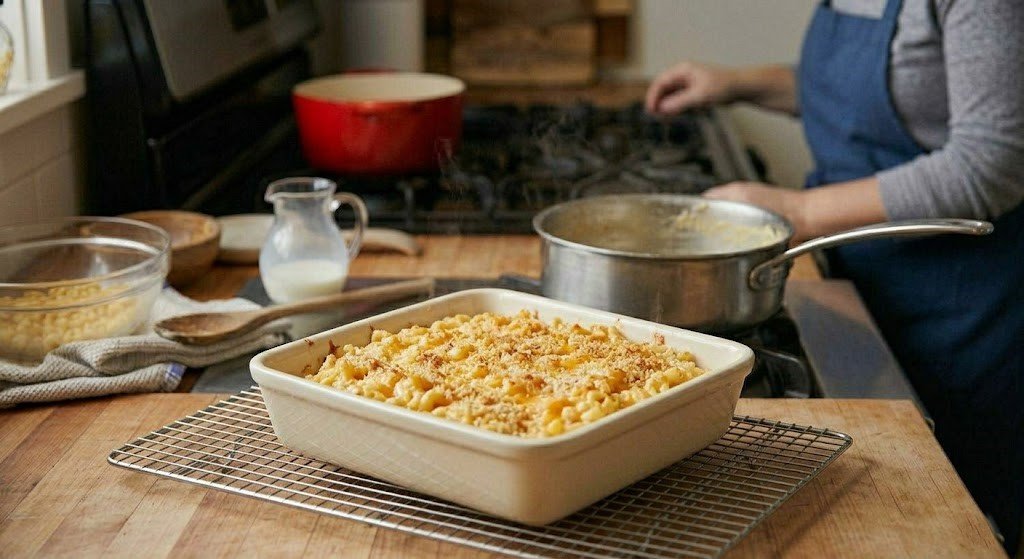

Hi, Welcome to Heaven Bite Recipe.com.
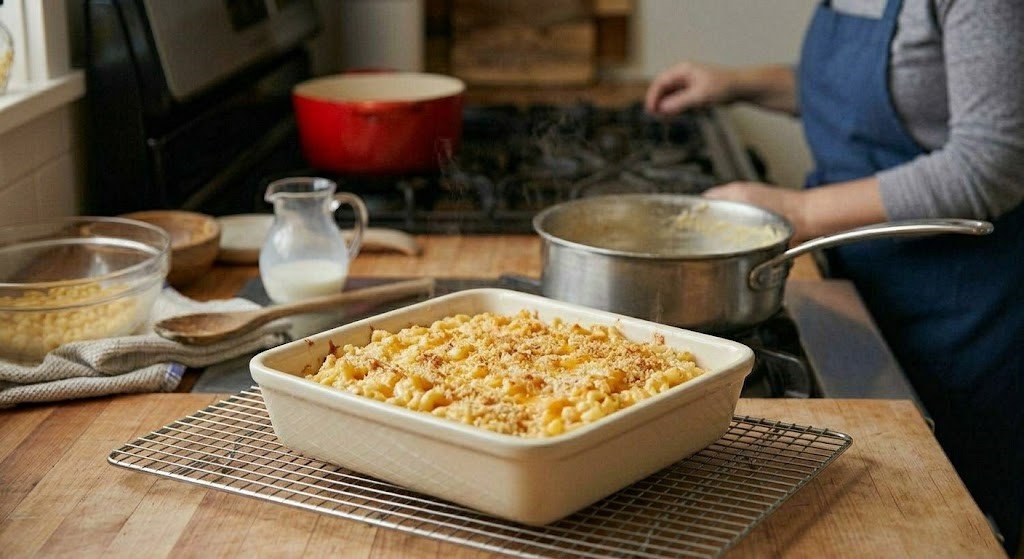
San Giorgio Mac and Cheese is a timeless comfort dish built on simple ingredients and careful technique.
Recipe Overview
- Prep Time: 15 minutes
- Cook Time: 30 minutes
- Total Time: 50 minutes
- Cuisine: American
- Course: Main Course / Side Dish
The combination of tender pasta and a smooth, creamy cheese sauce creates a meal that is both satisfying and versatile.
Hi, my Name is Dipendra Kumar. I am a chef. I like to cook food for my family and relatives. They called me a pro chef. I uploaded videos on social media.
This recipe focuses on achieving the right balance of texture, flavor, and consistency so that every bite feels rich without being heavy.
Unlike boxed versions, this homemade approach relies on a classic sauce base and proper cooking methods.
The result is a dish that can be served as a main course or paired with other foods for a complete meal.
What Is San Giorgio Mac and Cheese
San Giorgio Mac and Cheese refers to a homemade macaroni and cheese dish made using San Giorgio pasta, typically elbow macaroni or shells.
The pasta shape plays an important role because it holds the sauce well, ensuring even coating.
The dish is built around three key elements:
- Properly cooked pasta
- A roux-based cheese sauce
- Optional baking for a golden top
This method creates a creamy and cohesive dish rather than a dry or separated one.
Ingredients
Below is a complete ingredient list organized for clarity.
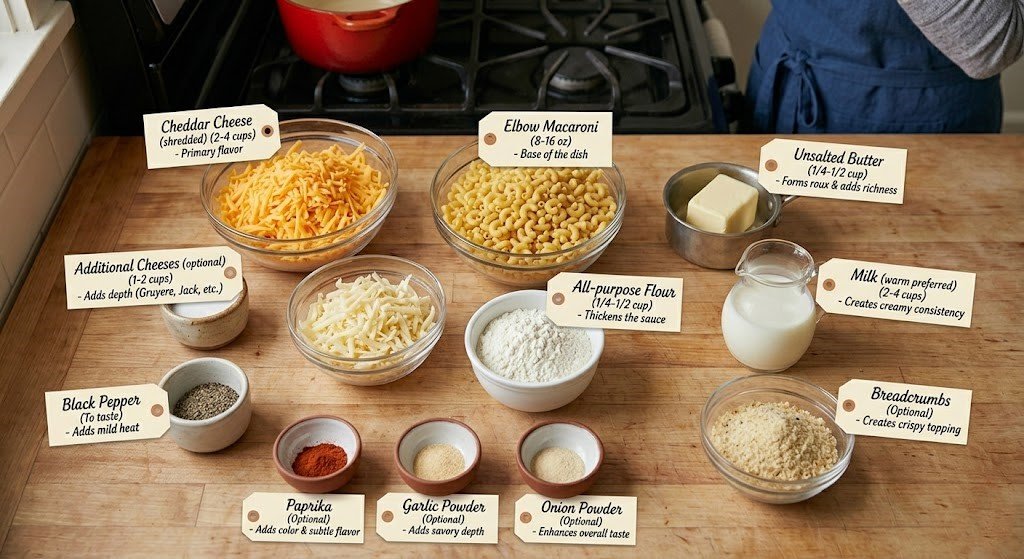
Ingredients Table
| Ingredient | Quantity | Purpose |
|---|---|---|
| Elbow macaroni | 8–16 oz | Base of the dish |
| Unsalted butter | 1/4–1/2 cup | Forms roux and adds richness |
| All-purpose flour | 1/4–1/2 cup | Thickens the sauce |
| Milk (warm preferred) | 2–4 cups | Creates creamy consistency |
| Cheddar cheese (shredded) | 2–4 cups | Primary flavor |
| Additional cheeses (optional) | 1–2 cups | Adds depth (Gruyere, Jack, etc.) |
| Salt | To taste | Enhances flavor |
| Black pepper | To taste | Adds mild heat |
| Paprika | Optional | Adds color and subtle flavor |
| Garlic powder | Optional | Adds savory depth |
| Onion powder | Optional | Enhances overall taste |
| Breadcrumbs | Optional | Creates crispy topping |
Equipment
Having the right tools ensures a smooth cooking process and consistent results.
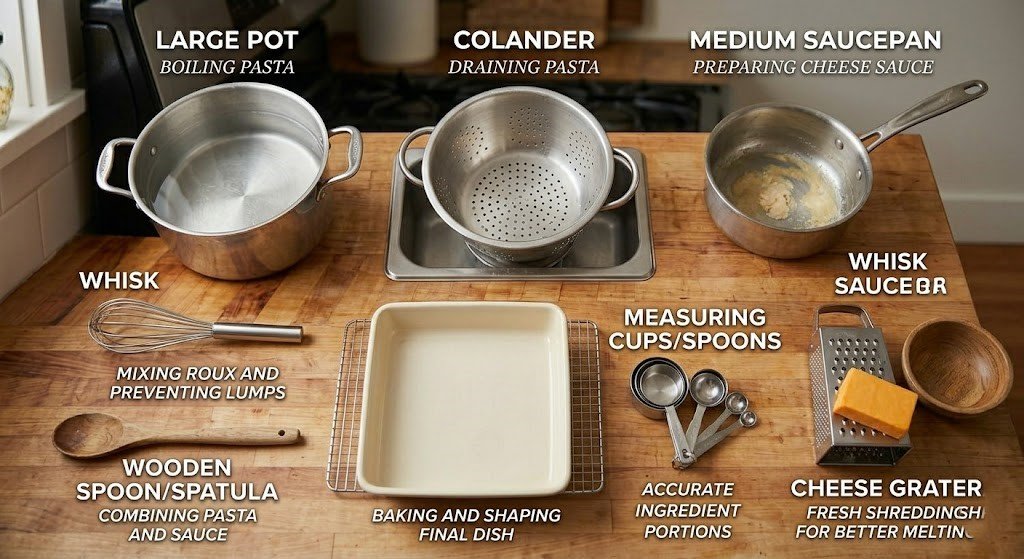
Equipment Table
| Equipment | Purpose |
|---|---|
| Large pot | Boiling pasta |
| Colander | Draining pasta |
| Medium saucepan | Preparing cheese sauce |
| Whisk | Mixing roux and preventing lumps |
| Wooden spoon/spatula | Combining pasta and sauce |
| Baking dish | Baking and shaping final dish |
| Measuring cups/spoons | Accurate ingredient portions |
| Cheese grater | Fresh shredding for better melting |
Pasta and Sauce Preparation
Boiling the Pasta
Start by bringing a large pot of salted water to a rolling boil. Add the macaroni and cook until al dente. The pasta should remain slightly firm because it will continue cooking later if baked.
Drain the pasta using a colander and set aside. Do not rinse, as the surface starch helps the sauce adhere better.
Making the Cheese Sauce
In a saucepan, melt butter over medium heat. Once melted, add flour and whisk continuously to form a smooth paste known as a roux.
Cook this mixture for one to two minutes to remove the raw flour taste.
Gradually pour in warm milk while whisking constantly. This step prevents lumps and creates a smooth base. Continue cooking until the mixture thickens enough to coat the back of a spoon.
Reduce the heat and add shredded cheese slowly. Stir gently until the cheese melts completely into a creamy sauce. Avoid high heat at this stage to prevent separation.
Season with salt, pepper, and optional spices such as paprika, garlic powder, or onion powder.
Combining Pasta and Sauce
Add the cooked macaroni to the cheese sauce and mix until every piece is evenly coated. The mixture should be creamy but not overly thick. If needed, adjust consistency by adding a small amount of milk.
Baking the Mac and Cheese
Transfer the mixture into a greased baking dish and spread it evenly. Sprinkle additional cheese or breadcrumbs on top for texture.
Bake in a preheated oven at 350°F (175°C) for 25–30 minutes until the top becomes golden and slightly crisp. Baking enhances flavor and creates a structured texture.
Stepwise Instructions
Step 1:
Boil salted water and cook macaroni until al dente. Drain and set aside without rinsing.
Step 2:
Melt butter in a saucepan over medium heat. Add flour and whisk to form a smooth roux.
Step 3:
Slowly add warm milk while whisking continuously. Cook until the sauce thickens.
Step 4:
Reduce the heat and stir in shredded cheese gradually. Season with salt, pepper, and optional spices.
Step 5:
Combine cooked pasta with the cheese sauce and mix well. Transfer to a baking dish and spread evenly.
Step 6:
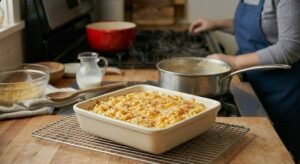
Add extra cheese or breadcrumbs on top if desired. Bake until golden and bubbly, then let rest briefly before serving.
Tips for Making San Giorgio Macaroni and Cheese
- Use freshly shredded cheese for a smoother sauce.
- Keep the heat low when adding cheese to prevent graininess.
- Slightly undercook pasta to avoid softness after baking.
- Stir continuously while making the sauce to avoid lumps.
- Taste and adjust the seasoning before combining with the pasta.
Expert Tips & Tricks
Achieving the ideal texture depends on controlling temperature and moisture. Warm milk blends more easily into the roux, reducing the risk of clumping.
Additionally, reserving a small amount of pasta water can help adjust the sauce consistency without diluting flavor.
Using a blend of cheeses enhances complexity. Cheddar provides sharpness, while other cheeses add creaminess or subtle nutty notes.
Common Mistakes to Avoid
- Overcooking the pasta before baking
- Adding cheese to the boiling sauce
- Using high heat when melting cheese
- Skipping seasoning adjustments
- Using pre-shredded cheese with additives
Avoiding these errors ensures a smoother, more balanced result.
Variations
This recipe can be adapted to suit different preferences:
- Add cooked bacon for a smoky flavor
- Mix in vegetables such as broccoli or spinach
- Include chicken or seafood for added protein
- Use different cheese blends for a unique taste
These variations allow flexibility without changing the core method.
Ingredient Substitutes
- Use gluten-free pasta and flour for a gluten-free version
- Replace milk with plant-based alternatives if needed
- Substitute butter with plant-based options
- Use cornstarch instead of flour for thickening
Each substitute may slightly affect the texture, but still produces good results.
Serving Suggestions
Serve the mac and cheese while warm for the best texture. It works well as both a main dish and a side.
It pairs well with:
- Fresh salads for balance
- Roasted vegetables for contrast
- Grilled meats for added protein
- Garlic bread for a complete comfort meal
Pairings and Serving Suggestions
To create a well-rounded meal, combine the richness of mac and cheese with lighter or crisp elements. Acidic dressings, fresh greens, or lightly seasoned vegetables help balance the dish.
Side Dishes for San Giorgio Mac and Cheese
- Roasted vegetables
- Steamed greens
- Grilled chicken or fish
- Toasted bread or rolls
These sides enhance the meal without overpowering the main dish.
Storage Instructions
Allow the dish to cool completely before storing. Transfer to an airtight container and refrigerate for up to four days.
Storage, Reheating, and Make-Ahead Tips
- Store in sealed containers to retain moisture
- Reheat gently to prevent drying
- Add a splash of milk when reheating
- Cover when reheating in the oven to maintain creaminess
Freezing for Later
Portion the cooled mac and cheese into freezer-safe containers. Freeze for up to two months. Thaw in the refrigerator before reheating.
Reheating Tips
Reheat on low heat and stir occasionally. Adding a small amount of milk helps restore the creamy texture.
Keeping It Fresh
Always cool the dish before sealing to prevent condensation. Proper storage maintains both texture and flavor.
Nutrition
- Calories: Approximately 400–520 per serving
- Protein: 15–25 grams
- Carbohydrates: 35–45 grams
- Fat: 20–30 grams
- Calcium: High due to cheese content
- Sodium: Moderate, depending on seasoning
Notes
- Baking is optional, but recommended for texture
- Cheese choice significantly impacts flavor
- Consistency can be adjusted with milk or pasta water
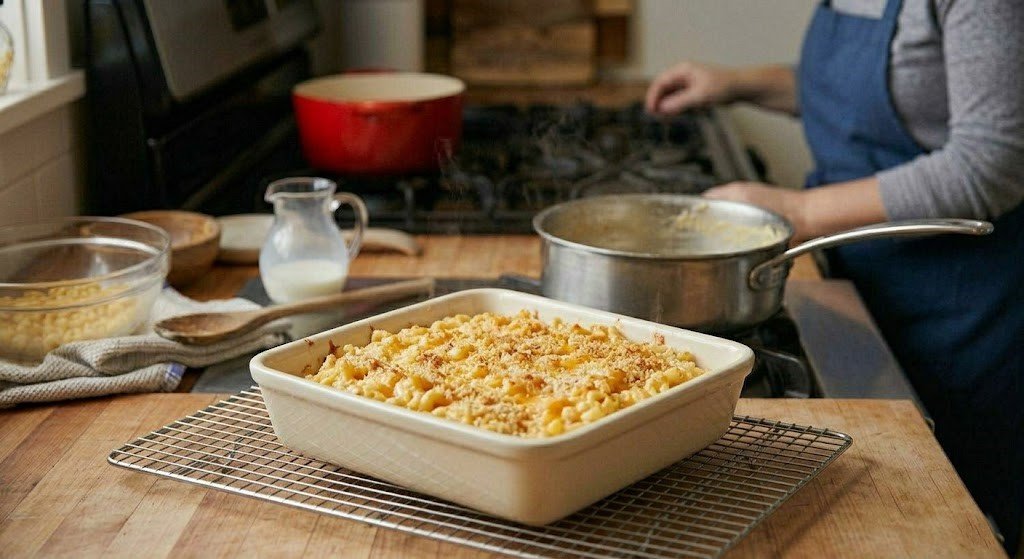
San Giorgio Mac and Cheese
Ingredients
Equipment
Method
- Boil salted water and cook macaroni until al dente. Drain and set aside without rinsing.

- Melt butter in a saucepan over medium heat. Add flour and whisk to form a smooth roux.
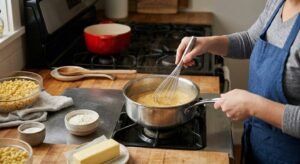
- Slowly add warm milk while whisking continuously. Cook until the sauce thickens.
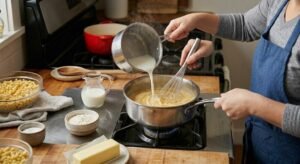
- Reduce the heat and stir in shredded cheese gradually. Season with salt, pepper, and optional spices.

- Combine cooked pasta with the cheese sauce and mix well. Transfer to a baking dish and spread evenly.

- Add extra cheese or breadcrumbs on top if desired. Bake until golden and bubbly, then let rest briefly before serving.
Notes
- Use freshly shredded cheese for a smoother sauce.
- Keep the heat low when adding cheese to prevent a grainy texture.
- Add a splash of milk when reheating to keep it creamy.
- Baking is optional but adds a crisp, golden top.
Can I make mac and cheese without baking it?
Yes, you can skip baking and serve it directly from the stovetop for a creamier texture.
Why is my cheese sauce grainy?
This usually happens from high heat. Melt cheese on low heat and avoid boiling.
What cheese works best for mac and cheese?
Cheddar is the most common, but mixing cheeses like mozzarella or Gruyere improves flavor and texture.
How do I keep mac and cheese creamy when reheating?
Add a little milk before reheating and warm it slowly.
Can I use a different pasta shape?
Yes, shells, penne, or rotini work well as long as they hold the sauce properly.
Conclusion
San Giorgio Mac and Cheese is a reliable and adaptable recipe that delivers consistent results when prepared with care.
By focusing on proper technique—especially when making the sauce—you can achieve a dish that is creamy, flavorful, and well-balanced.
Whether served as a simple family meal or part of a larger spread, this recipe offers both comfort and versatility.