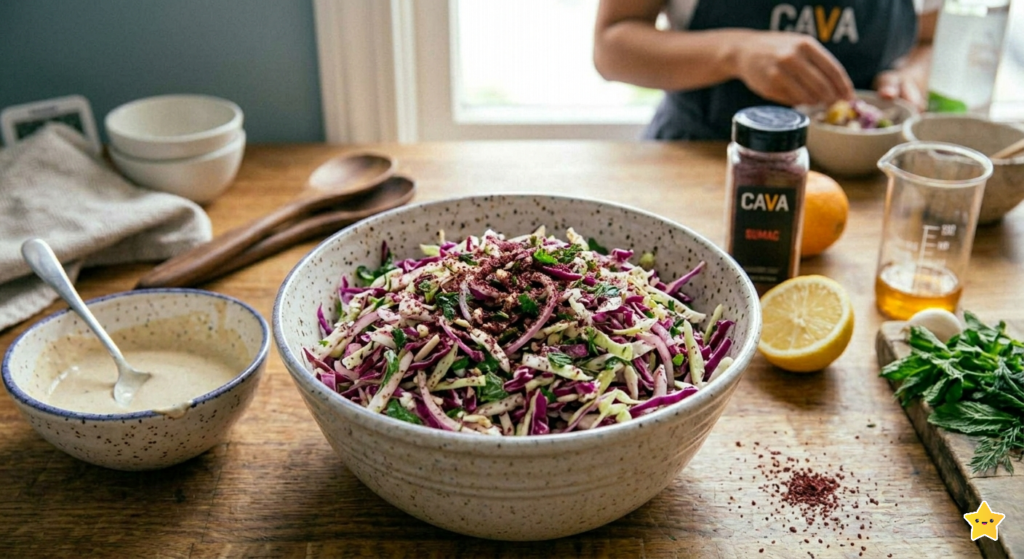
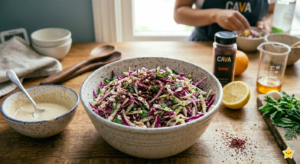
This CAVA Sumac Slaw Recipe combines crunchy cabbage, fresh herbs, cucumbers, and a creamy tahini dressing with tangy sumac. It’s a quick Mediterranean-inspired side dish perfect for bowls, wraps, and meal prep.
Recipe Overview
| Detail | Information |
|---|---|
| Recipe Name | CAVA Sumac Slaw Recipe |
| Course | Side Dish |
| Cuisine | Mediterranean-Inspired |
| Prep Time | 15 Minutes |
| Cook Time | 0 Minutes |
| Total Time | 15 Minutes |
| Servings | 4 Servings |
What Is CAVA Sumac Slaw?
I first tried this slaw in a Mediterranean-style grain bowl, and honestly, it was one of those toppings that completely changed the meal.
CAVA Sumac Slaw is a crunchy cabbage-based salad made with fresh vegetables, herbs, and a tangy dressing flavored with sumac, a spice widely used throughout the Middle East.
Sumac comes from dried berries and has a naturally tart, citrus-like flavor. Instead of adding more lemon juice, many traditional Lebanese and Palestinian recipes use sumac to create brightness and depth.
What makes this slaw special is the balance. You get crisp cabbage, cooling cucumbers, fragrant herbs, and creamy tahini all working together. It feels light but somehow still filling.
According to the United States Department of Agriculture (USDA), cabbage is naturally low in calories while providing fiber, vitamin C, and vitamin K.
That’s probably one reason why cabbage-based salads continue growing in popularity among people looking for healthier meal options.
Why You’ll Love This Recipe
I keep making this recipe because it fits into almost any meal. Whether I’m preparing grilled chicken, falafel, roasted vegetables, or a rice bowl, this slaw adds freshness and texture.
Some reasons I enjoy it:
- Quick preparation with no cooking required
- Fresh Mediterranean-inspired flavors
- Rich in vegetables and herbs
- Easy to customize
- Great for meal prep
- Works as both a side dish and topping
The best thing is that it doesn’t taste like typical heavy coleslaw. It feels cleaner and brighter.
Difference Between CAVA Sumac Slaw and Traditional Lebanese Sumac Slaw
Traditional Lebanese cabbage salads are usually very simple. Most versions include cabbage, onions, lemon juice, olive oil, and sumac.
The restaurant-inspired version has evolved a bit. It often includes cucumbers, fresh mint, dill, and tahini dressing. The addition of tahini creates a creamier texture while still keeping the salad fresh.
I think of Lebanese sumac slaw as a traditional family side dish, while this version feels more like something designed for grain bowls and modern Mediterranean meals.
Ingredients You’ll Need
| Ingredient | Quantity |
|---|---|
| Red cabbage, thinly sliced | 3 cups |
| Cucumbers, thinly sliced | 2 medium |
| Red onion, thinly sliced | ¼ cup |
| Fresh mint, chopped | 2 tbsp |
| Fresh dill, chopped | 2 tbsp |
| Tahini | 3 tbsp |
| Fresh lemon juice | 2-3 tbsp |
| Garlic cloves, minced | 2 |
| Sumac | 1 tsp |
| Salt | ½ tsp |
| Black pepper | ¼ tsp |
| Honey | 1 tsp |
| Water | 2-4 tbsp |
Equipment
| Equipment | Purpose |
|---|---|
| Large mixing bowl | Mixing vegetables |
| Small bowl | Preparing dressing |
| Sharp knife | Slicing vegetables |
| Cutting board | Prep work |
| Measuring spoons | Accurate measurements |
| Measuring cups | Portioning ingredients |
| Whisk | Mixing dressing |
| Tongs or salad spoon | Tossing slaw |
Why Sumac Is the Star Ingredient
If you’ve never cooked with sumac before, you’re missing out on something really good.
Sumac has a tangy flavor often compared to lemon zest, but it’s more earthy and complex. Middle Eastern cuisines have used it for centuries in dishes like fattoush, grilled meats, and salads.
Research published in food science journals has shown that sumac contains antioxidants, including flavonoids and polyphenols.
While I don’t eat it specifically for health reasons, it’s nice knowing that it brings more than just flavor.
Its deep burgundy color also makes the slaw look beautiful.
How to Make CAVA Sumac Slaw
Step 1: Slice the Red Cabbage
Using a sharp knife, slice the cabbage as thinly as possible. Thin slices absorb dressing better and create a softer texture.
Step 2: Prepare the Cucumbers and Onion
Slice the cucumbers into thin rounds and cut the red onion into very fine strips. Add both to a large bowl.
Step 3: Add Fresh Herbs
Roughly chop the mint and dill. Sprinkle them over the vegetables.
Step 4: Make the Tahini Sumac Dressing
In a separate bowl combine:
- Tahini
- Lemon juice
- Garlic
- Sumac
- Salt
- Pepper
- Honey
Whisk until smooth.
Step 5: Adjust the Dressing Consistency
Add water gradually while whisking. Tahini can become thick very quickly, so don’t rush this step.
Step 6: Toss the Slaw with Dressing
Pour the dressing over the vegetables and toss thoroughly.
Step 7: Massage the Cabbage
Using clean hands or tongs, gently massage the cabbage for about one minute.
This small step helps soften the cabbage and allows the dressing to penetrate deeper into the vegetables.
Step 8: Rest and Serve
Let everything rest for about 10 minutes before serving.
The flavors blend better, and the cabbage becomes slightly tender while keeping its crunch.
Tips for the Best CAVA Sumac Slaw
After making this recipe many times, I learned a few tricks.
Slice Everything Thin
Thinner vegetables create a more restaurant-style texture.
Use Fresh Lemon Juice
Bottled lemon juice works, but honestly, the flavor isn’t nearly as bright.
Fresh Herbs Matter
I’ve tested dried herbs before, and it just wasn’t the same. Fresh mint and dill make a huge difference.
Don’t Skip the Resting Time
Even five minutes helps the flavors settle together.
Taste Before Serving
Sometimes lemons are more sour than others. A quick taste test lets you adjust the balance.
Ingredient Substitutions and Variations
One reason I love this recipe is how flexible it can be.
Easy Substitutions
- Green cabbage instead of red cabbage
- Parsley instead of dill
- Maple syrup instead of honey
- Lime juice instead of lemon juice
- Greek yogurt instead of tahini
- Agave syrup for a vegan version
Additional Vegetables
You can also add:
- Shredded carrots
- Bell peppers
- Radishes
- Green onions
Each variation changes the flavor a little but still keeps the spirit of the dish.
Common Mistakes to Avoid
Cutting Vegetables Too Thick
Large chunks don’t absorb dressing properly and can feel awkward to eat.
Adding Too Much Water
I’ve made this mistake before. The dressing suddenly becomes watery and loses its creamy texture.
Skipping Fresh Herbs
Fresh herbs are one of the most important flavor components.
Overdressing the Slaw
Too much dressing can weigh everything down.
Making It Too Far Ahead
The vegetables release moisture over time and become softer than intended.
What to Serve with CAVA Sumac Slaw
This slaw pairs well with many Mediterranean dishes.
Protein Pairings
- Grilled chicken breast
- Chicken shawarma
- Falafel
- Lamb kebabs
- Grilled salmon
- Roasted chickpeas
Grain Bowl Ideas
I often use this slaw in bowls with:
- Brown rice
- Quinoa
- Saffron rice
- Farro
- Couscous
Mediterranean Plate Ideas
Combine the slaw with:
- Hummus
- Tzatziki
- Roasted vegetables
- Warm pita bread
- Pickled onions
The combination feels fresh and satisfying every time.
How to Store Leftover
Store leftovers in an airtight container inside the refrigerator.
For best texture, eat within 48 hours.
The vegetables will release some water naturally, which is completely normal. Just stir before serving again.
I don’t recommend freezing because cabbage becomes mushy once thawed.
Nutritional Benefits
- Calories: 140
- Protein: 3g
- Carbohydrates: 10g
- Fiber: 4g
- Fat: 10g
- Sugar: 4g
- Sodium: 290mg
Key Health Benefits
- Rich in vitamin C
- Good source of vitamin K
- Contains dietary fiber
- Provides antioxidants from sumac
- Includes healthy fats from tahini
- Supports digestive health
- Low in processed ingredients
A study published by Harvard T.H. Chan School of Public Health highlights that diets rich in vegetables, herbs, and plant-based fats are associated with better long-term health outcomes. While this slaw isn’t a miracle food, it certainly fits into a balanced eating pattern.
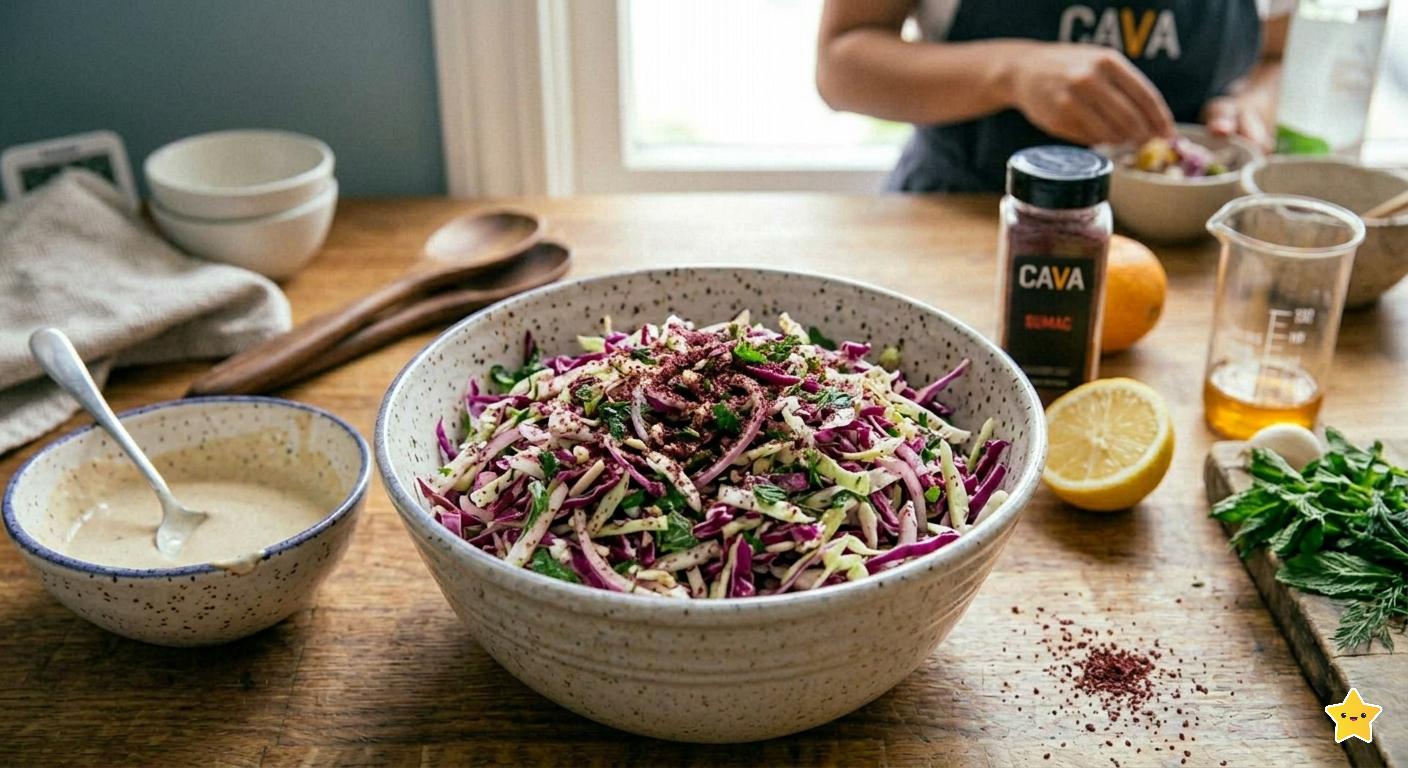
CAVA Sumac Slaw Recipe
Ingredients
Equipment
Method
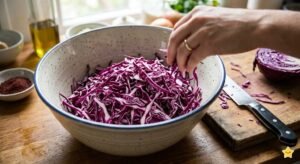
- Thinly slice the red cabbage and place it into a large mixing bowl.
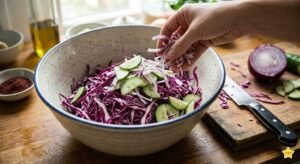
- Slice the cucumbers and red onion into thin pieces and add them to the bowl.
- Chop the fresh mint and dill, then sprinkle them over the vegetables.

- In a small bowl, whisk together tahini, lemon juice, garlic, sumac, salt, black pepper, and honey.

- Slowly add water while whisking until the dressing becomes smooth and pourable.

- Pour the dressing over the cabbage mixture and toss until evenly coated.

- Gently massage the cabbage for about 1 minute to help soften it and absorb the dressing.

- Let the slaw rest for 10 minutes before serving for the best flavor and texture.
Notes
• Slice the cabbage as thin as possible for restaurant-style texture.
• Fresh mint and dill are highly recommended over dried herbs.
• Store leftovers in an airtight container for up to 2 days.
• For a vegan version, replace honey with maple syrup or agave nectar.
FAQs:-
What is CAVA Sumac Slaw made of?
CAVA Sumac Slaw is made with red cabbage, cucumbers, red onion, fresh herbs, sumac, and a creamy tahini dressing.
What does sumac taste like?
Sumac has a tangy, citrus-like flavor similar to lemon but with a slightly earthy taste.
Can I make CAVA Sumac Slaw ahead of time?
Yes, you can prepare it a few hours ahead and refrigerate it until serving.
Is CAVA Sumac Slaw healthy?
Yes, it contains fresh vegetables, fiber, vitamins, and healthy fats from tahini.
How long does CAVA Sumac Slaw last in the fridge?
When stored in an airtight container, it stays fresh for up to 2 days.
Conclusion
I never expected a simple cabbage slaw to become one of my favorite additions to meals, but here we are. The combination of crunchy vegetables, fresh herbs, creamy tahini, and tangy sumac creates something that feels both refreshing and satisfying.
What I like most is that it works with almost everything. One day I pair it with grilled chicken, the next day it’s sitting on top of a grain bowl loaded with roasted vegetables.
If you’re trying to bring more Mediterranean flavors into your kitchen, this slaw is honestly one of the easiest places to start. It’s simple, colorful, and packed with texture. After making it a few times, you’ll probably start finding excuses to put it on everything too.