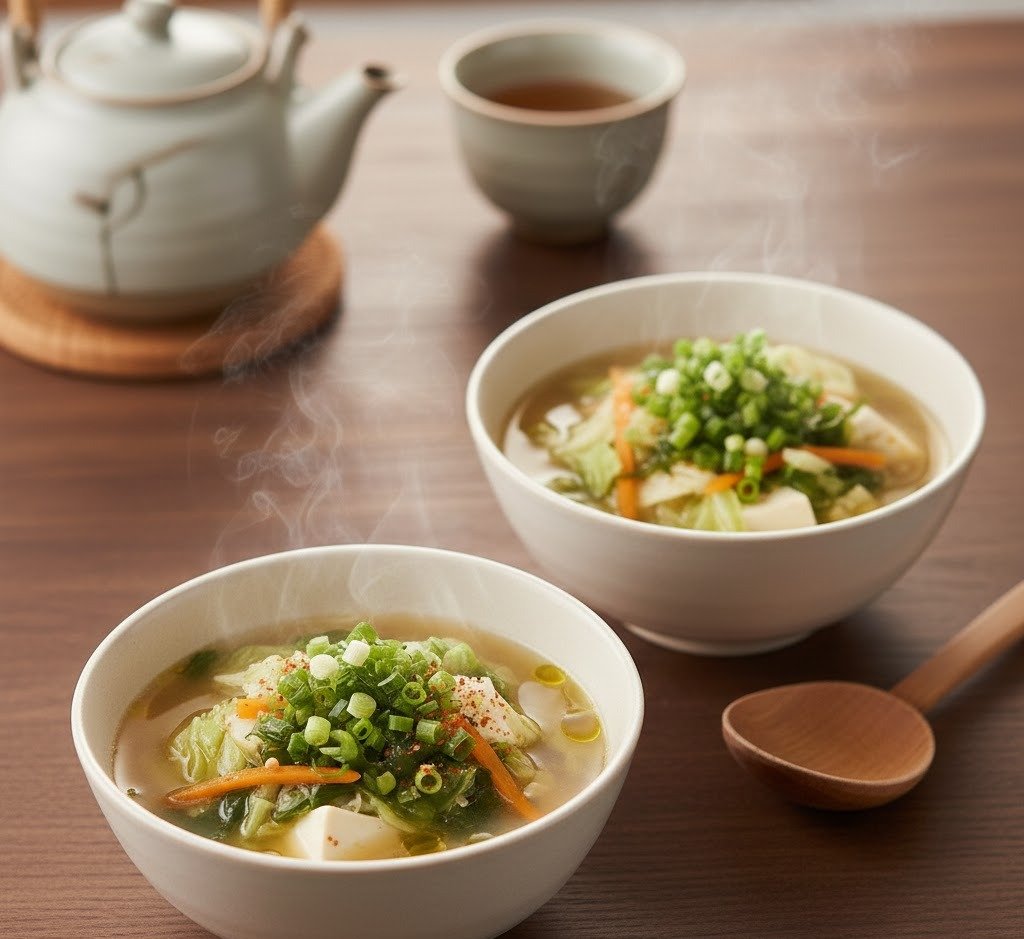
This cabbage miso soup is one of those recipes I come back to again and again because it’s simple, cozy, and honestly kind of healing in a quiet way.
It’s light but still satisfying, and it tastes like you actually put effort into it. even when you didn’t.
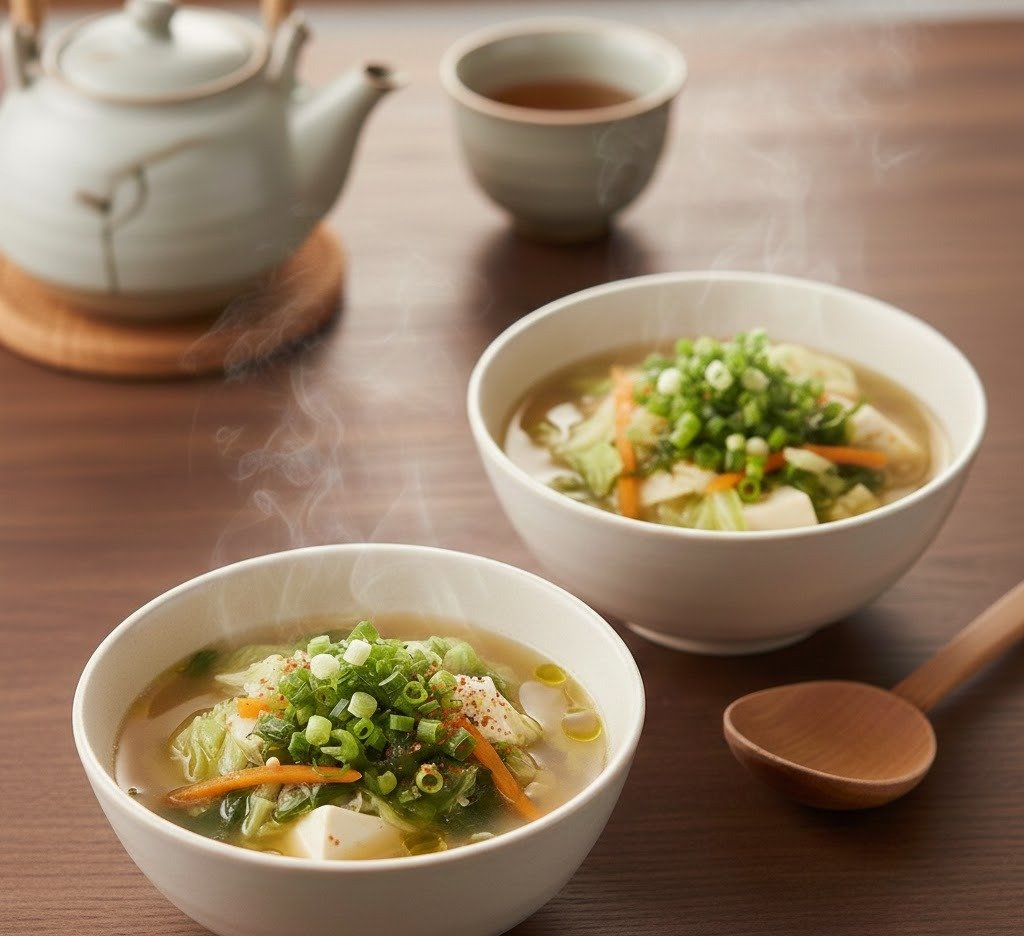
I love making it on chilly nights, but I also make it in spring and summer when I want something warm that doesn’t feel heavy.
Hi, my name is Diendra Kumar. I like cooking food for my family and relatives. My relative calls me a pro chef.
Quick Overview
- Cuisine: Japanese-inspired
- Prep Time: 10 minutes
- Cook Time: 15 minutes
- Servings: 4
Cabbage miso soup is a simple Japanese-style soup made with tender cabbage simmered in broth, then finished with miso paste stirred in gently at the end.
The result is savory, comforting, and full of umami flavor, even though the ingredient list stays pretty small.
This version is flexible on purpose. You can keep it vegan with vegetable broth and tofu, or you can make it richer by topping it with an onsen-style egg.
You can even add noodles if you want to turn it into a quick lunch.
I also like this soup because cabbage is cheap, easy to find year-round, and it holds up beautifully in broth without turning instantly mushy. It’s kind of the perfect vegetable for soup, if you ask me.
Why You’ll Love This
I love how this soup gives me that cozy comfort-food feeling while still tasting fresh and light at the same time.
That balance is honestly one of the main reasons I keep making it again and again.
It’s also one of the quickest soups I prepare. If I already have my cabbage sliced and ready, the whole recipe comes together in almost no time.
Another reason I enjoy this soup so much is how easy it is to customize. Sometimes I keep it simple and traditional, and other times I add tofu, mushrooms, carrots, noodles, or even a cracked egg to make it more hearty and satisfying.
If you’re like me and get tired of eating the same recipes repeatedly, this soup is perfect to keep in your meal rotation because you can change the ingredients every time and it still turns out delicious.
What You’ll Need
This recipe is easy, but the key is having the right basics. You’ll need a good broth, miso paste, cabbage, and something to dissolve the miso in before adding it to the pot.
You don’t need any fancy equipment. I’m using a medium soup pot and a small bowl for mixing the miso. That’s it.
Ingredients
Below is the full ingredient list in table form, including optional add-ins.
| Amount | Unit | Name | Notes |
|---|---|---|---|
| 6 | cups | vegetable broth or water | low-sodium is best |
| 3 | cups | green cabbage | thinly sliced |
| 1 | medium | carrot | optional, thinly sliced |
| 1/2 | medium | yellow onion | optional, thinly sliced |
| 3 | cloves | garlic | sliced or minced |
| 3 | tbsp | miso paste | white, yellow, or red |
| 1 | tbsp | dried wakame | optional but recommended |
| 8 | oz | silken tofu | optional, cubed |
| 2 | tbsp | green onion | for topping |
| 1 | tsp | sesame oil | optional, for serving |
| to taste | — | shichimi togarashi or chili flakes | optional |
Equipment
| Amount | Name | Notes |
|---|---|---|
| 1 | medium soup pot | 4–6 quart is perfect |
| 1 | cutting board | any kind |
| 1 | chef’s knife | for cabbage slicing |
| 1 | ladle | for scooping broth |
| 1 | small bowl | for dissolving miso |
| 1 | whisk or fork | helps smooth miso |
How to Make Cabbage Miso Soup
Step 1
If you’re using wakame, soak it in warm water for about 5 minutes. Drain it and set it aside.
Step 2
Add your broth (or water) to a medium soup pot. Add sliced cabbage, onion, carrot, and garlic. Bring the pot to a gentle boil over medium heat.
Step 3
Reduce the heat to a simmer. Cover and cook for about 10–12 minutes, or until the cabbage is tender but still has a little bite.
Step 4
Turn off the heat completely. This part matters, so don’t skip it. Scoop about 1 cup of the hot broth into a small bowl.
Step 5
Add miso paste to the bowl and whisk it until smooth. This helps prevent clumps and keeps the miso from sticking to the pot.
Step 6
Pour the miso mixture back into the soup pot and stir gently. Add tofu and wakame if using.
Step 7
Let the soup sit for 1–2 minutes to warm everything through. Serve hot with green onion on top. Add a tiny drizzle of sesame oil or chili flakes if you want.
How to Make It Faster (15-Minute Version)
If you want this soup in 15 minutes or less, you totally can.
The easiest way is to skip the carrot and onion and use just cabbage and garlic. Slice the cabbage thinly so it cooks quickly.
Use store-bought broth, so you’re not messing with anything extra.
Once the cabbage is tender, turn off the heat and stir in the miso the same way. That part never changes.
It’s still delicious and feels like a real meal, even when you’re tired and hungry.
How to Make Onsen Tamago for Miso Soup (Optional)
If you want to make this soup feel special, adding an onsen-style egg is such a good move. The yolk breaks into the soup and makes it creamy without adding cream or dairy.
Step 1
Crack 1 egg into a small microwave-safe bowl.
Step 2
Pour water around the egg, then add enough water to fully cover the yolk.
Step 3
Gently poke the yolk with a toothpick. This helps prevent it from bursting.
Step 4
Microwave at 500W for about 75–90 seconds. The white should look just set, and the yolk should still be soft.
Step 5
Lift the egg out with a slotted spoon and drain.
Step 6
Place the egg on top of your miso soup and serve immediately.
If you don’t want to microwave an egg, a poached egg works too. It’s not the same, but it gives you the same creamy effect when you break it open.
Pro Cooking Tips for Success
Miso soup is easy, but the little details are what make it taste really good.
The biggest tip is not boiling the soup after adding miso. If you boil it, the flavor becomes harsher and less fresh. It also loses that delicate aroma that makes miso soup taste like miso soup.
Another big tip is dissolving miso in a separate bowl before adding it. This is the easiest way to avoid clumps and make the broth smooth.
Try not to overcook cabbage. If you simmer it forever, it turns soft and sweet, but it can lose its nice texture. Ten to twelve minutes is usually perfect for green cabbage.
If your soup tastes a little flat, don’t immediately add salt. Try wakame, mushrooms, a small splash of soy sauce, or a tiny drizzle of sesame oil instead. Those add flavor without making the soup taste overly salty.
Serving Suggestions
This soup works as a side dish, a starter, or a full meal depending on what you serve with it.
If I’m serving it as part of a Japanese-inspired dinner, I’ll pair it with rice and something simple like cucumber salad or tofu.
If I’m eating it for lunch, I’ll add noodles. Udon, ramen, and soba all work well. I like ramen noodles when I want it to feel like a quick comfort meal.
For toppings, green onion is my favorite because it adds freshness. Sesame seeds are great too. If you like spice, shichimi togarashi gives it a peppery kick without overwhelming the soup.
Delicious Variations
This cabbage miso soup is a great base recipe, and you can take it in a bunch of directions.
If you want a vegan version that feels more filling, add tofu and extra wakame. It makes the soup feel more complete.
If you want a cabbage miso soup with egg, top it with onsen tamago or even just a soft poached egg.
If you want a brighter soup, add chopped tomato. Tomato adds sweetness and a little acidity, and it’s surprisingly good with miso.
If you like spicy soups, stir in a little chili paste or top it with shichimi. You can also add grated ginger for warmth.
If you want a higher-protein meal, add cooked lentils or chickpeas. It’s not traditional, but it’s delicious and very satisfying.
And if you want a creamy version, whisk in a spoonful of tahini or add a splash of soy milk at the end. It makes the broth richer without needing dairy.
Substitutes for Common Ingredients
If you’re missing something, don’t worry. This soup is flexible.
If you don’t have dashi, vegetable broth works beautifully. If you only have water, use a flavorful miso and add garlic or wakame.
If you don’t have wakame, try mushrooms or spinach instead. Mushrooms add umami, and spinach adds freshness.
If you don’t have tofu, you can skip it or replace it with egg. Egg is one of the best protein add-ins for miso soup.
If you don’t have miso paste, you can’t really make miso soup, but you can still make a tasty cabbage broth soup using soy sauce and a little sesame paste. It won’t taste the same, but it’s still comforting.
Storage & Make-Ahead Tips
This soup stores well, but there are a few things I always do to keep it tasting fresh.
Let the soup cool to room temperature before refrigerating it. Store it in an airtight container for up to 3 days.
When reheating, warm it gently on the stove over low heat. Try not to boil it. If you microwave it, use shorter bursts and stir in between.
If you add noodles, store them separately so they don’t soak up all the broth.
If you plan to freeze the soup, it’s best to freeze it without tofu. Frozen tofu changes texture and becomes spongy. Some people like that texture, but I personally don’t love it in miso soup.
If you want to meal prep, you can make the broth and cabbage ahead of time, store it, and add miso only when reheating. That gives you the freshest flavor.
Nutritional Information
Here’s a general estimate for 1 serving of cabbage miso soup (made with tofu, without noodles). This will vary depending on your broth and miso brand.
- Calories: 120–170
- Protein: 7–11g
- Carbohydrates: 9–14g
- Fat: 4–7g
- Fiber: 2–4g
- Sodium: varies (miso can be high in sodium)
Cabbage Miso Soup Recipe
Ingredients
Equipment
Method
- If you’re using wakame, soak it in warm water for about 5 minutes. Drain and set aside.
- Add the vegetable broth to a medium soup pot. Add cabbage, onion, carrot, and garlic. Bring to a gentle boil over medium heat.
- Reduce heat to a simmer, cover, and cook for 10–12 minutes until the cabbage is tender but still has a little bite.
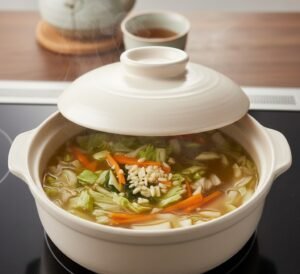
- Turn off the heat completely. Scoop about 1 cup of hot broth into a small bowl. Whisk the miso paste into the broth until smooth.

- Pour the dissolved miso mixture back into the pot and stir gently. Add tofu and drained wakame (if using).
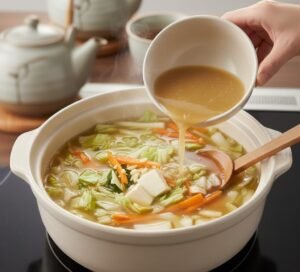
- Let the soup sit for 1–2 minutes to warm through (do not boil). Ladle into bowls and top with green onion. Add sesame oil or shichimi if you like.

Notes
- Don’t boil after adding miso. It makes the flavor harsher and less fresh.
- Always dissolve miso first in a bowl with hot broth so you don’t get clumps.
- For a more filling soup, I sometimes add cooked ramen noodles in the bowl before pouring the soup over.
- Leftovers keep well in the fridge for up to 3 days. Reheat gently so it doesn’t boil.
Youtube Videos
FAQs:-
Can I make cabbage miso soup without dashi?
Yes. You can use vegetable broth or even water, but the flavor will be lighter. Adding wakame or mushrooms helps boost umami.
What type of miso is best for miso soup?
White miso is mild and slightly sweet, yellow miso is balanced, and red miso is stronger and saltier. Any of them work.
Can I boil miso soup?
No, it’s best not to. Boiling after adding miso can make the flavor harsh and reduce its delicate aroma.
How long does cabbage miso soup last in the fridge?
It keeps well for about 3 days in an airtight container. Reheat gently so it doesn’t boil.
Can I freeze cabbage miso soup?
Yes, but it’s best frozen without tofu and noodles. Tofu can turn spongy after freezing, and noodles get mushy.
Conclusion
This cabbage miso soup recipe is one of those simple meals that never gets old for me. It’s cozy, quick, and flexible enough that I can make it a dozen different ways depending on what I have.