
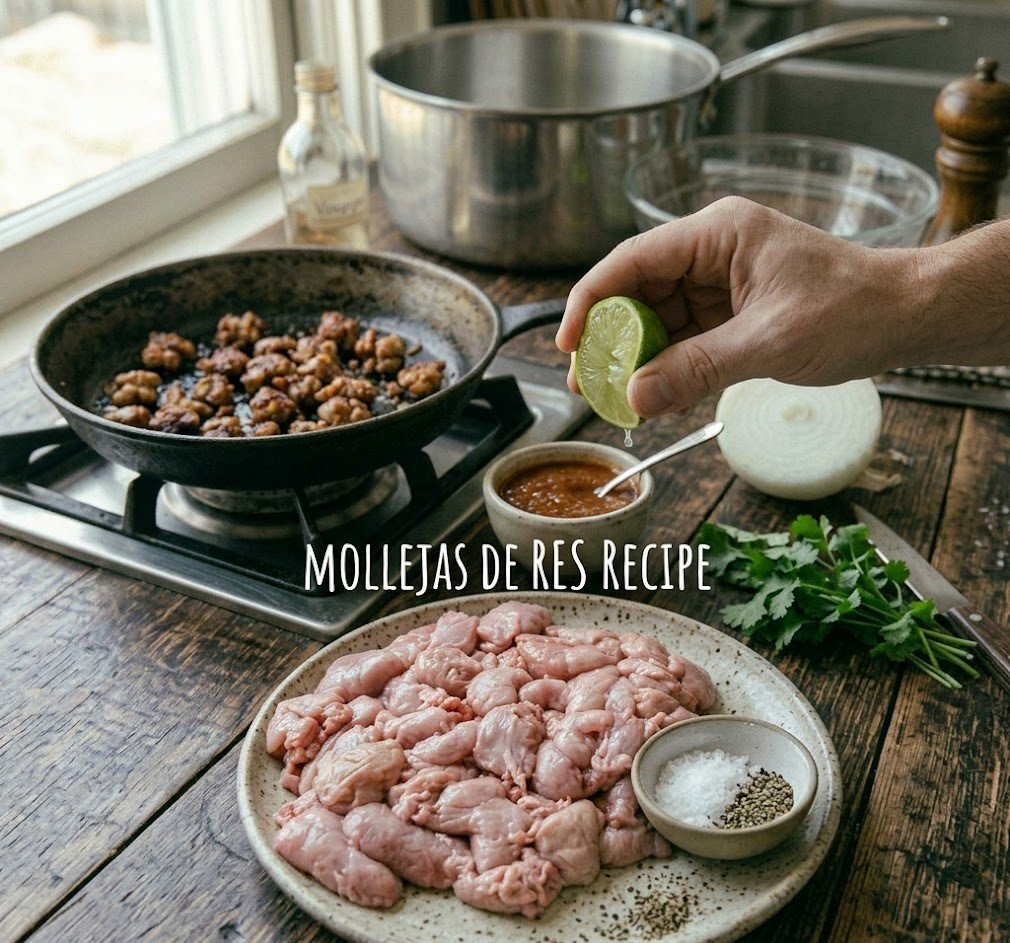

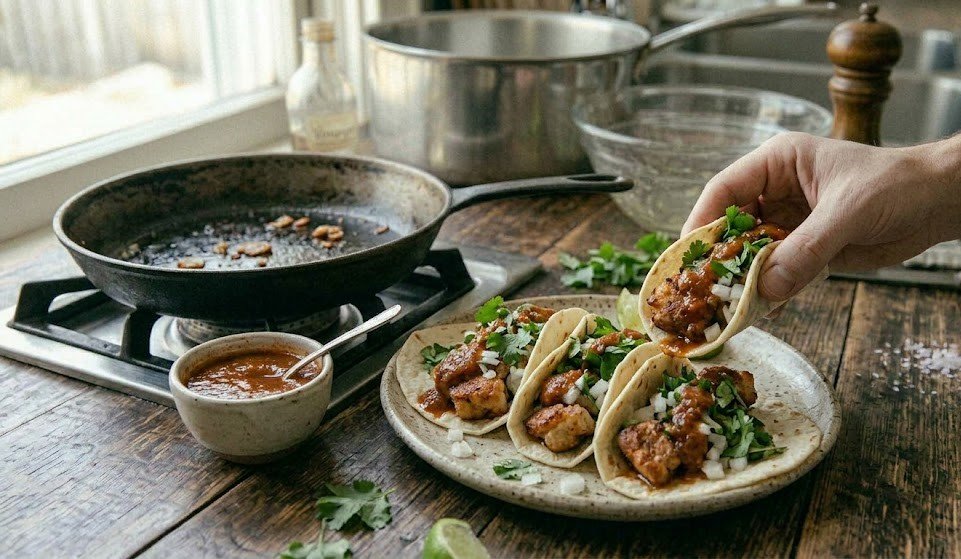
Mollejas de res, commonly known as beef sweetbreads, are one of the most unique and rewarding ingredients you can cook at home.
Despite the name, they are not bread at all—they are glands, typically the thymus or pancreas of a young animal.
When prepared correctly, they deliver a remarkable contrast: a crispy golden exterior with a soft, creamy interior and a rich, buttery flavor.
Hi, my Dipendra Kumar. I am a chef. I cooked food for my family and relatives.
My family and relatives also like my food. They called me a pro chef.
This guide walks you through everything you need to know—from understanding the ingredient to preparing, cooking, and serving it properly.
While the process may seem detailed, it becomes straightforward once you understand each step.
What Are Mollejas de Res?
Mollejas de res are a type of organ meat, or offal, taken from cattle. They are most commonly the thymus gland (throat sweetbread) or the pancreas (heart sweetbread).
These cuts are highly valued in many cuisines, especially in Mexican, Argentine, and French cooking.
Unlike stronger organ meats such as liver or kidney, sweetbreads have a much milder taste. This makes them an excellent entry point for anyone new to offal.
Types of Sweetbreads: Throat vs Heart
There are two main types of mollejas you may encounter:
- Throat sweetbreads (thymus): Softer, more delicate, and easier to cook. Ideal for beginners.
- Heart sweetbreads (pancreas): Slightly firmer, richer, and more structured.
Both types work well for this recipe, but throat sweetbreads are generally more forgiving during cooking.
Flavor and Texture of Beef Sweetbreads
One of the reasons mollejas are considered a delicacy is their texture. When cooked properly:
- The outside becomes crispy and golden
- The inside remains soft, creamy, and almost custard-like
The flavor is mild, slightly earthy, and buttery. It absorbs seasoning well without losing its natural character.
Why Mollejas Are a Delicacy
Across many cultures, mollejas are seen as a premium ingredient. In Argentina, they are a highlight of traditional barbecue (asado).
In Mexico, they are often served in tacos, while in French cuisine, they appear in refined dishes with sauces and butter.
Their appeal lies in the technique required to cook them well. When done right, they offer a luxurious eating experience that few other cuts can match.
Ingredients
Below is a simple ingredient list that keeps the focus on the natural flavor of mollejas:
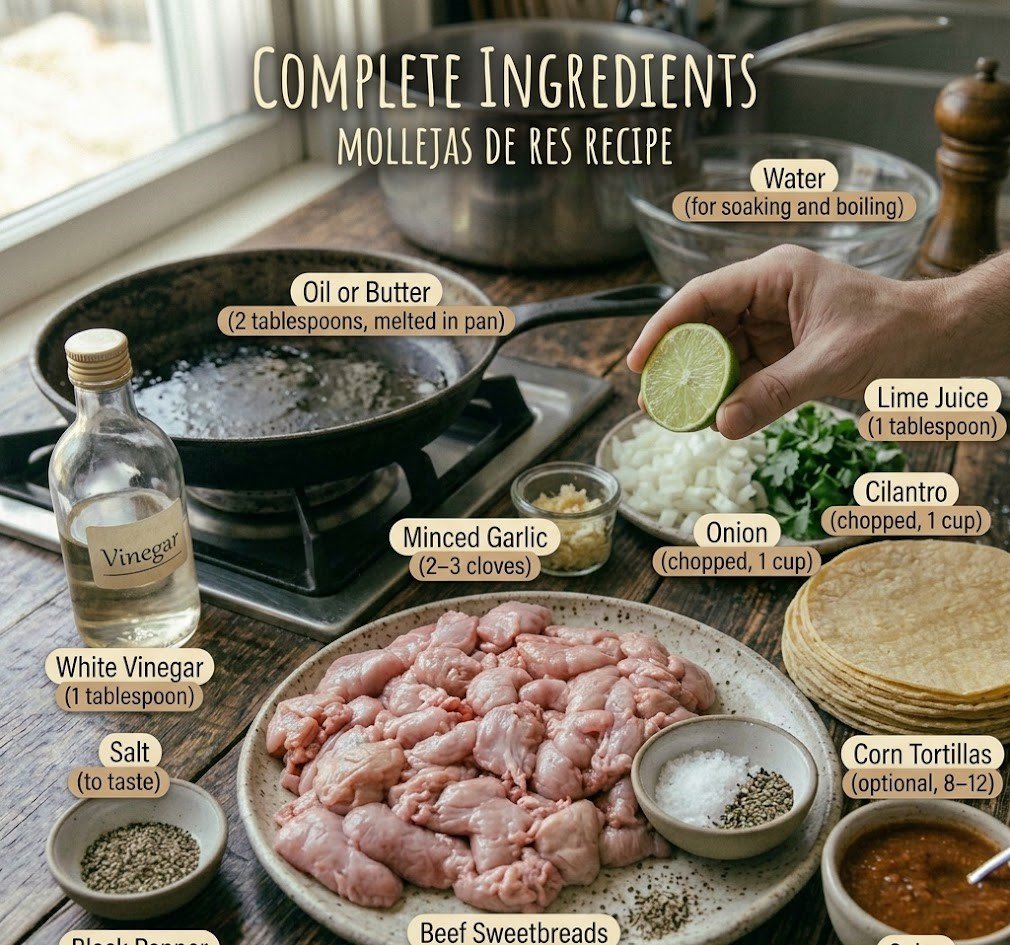
| Ingredient | Quantity |
|---|---|
| Beef sweetbreads (mollejas de res) | 1–2 pounds |
| Water | For soaking and boiling |
| White vinegar | 1 tablespoon |
| Salt | To taste |
| Black pepper | ½ teaspoon |
| Garlic (minced) | 2–3 cloves |
| Oil or butter | 2 tablespoons |
| Lemon or lime juice | 1 tablespoon |
| Corn tortillas (optional) | 8–12 |
| Onion (chopped) | 1 cup |
| Fresh cilantro (chopped) | 1 cup |
| Salsa (optional) | To taste |
Equipment
You don’t need any specialized tools—just basic kitchen equipment:
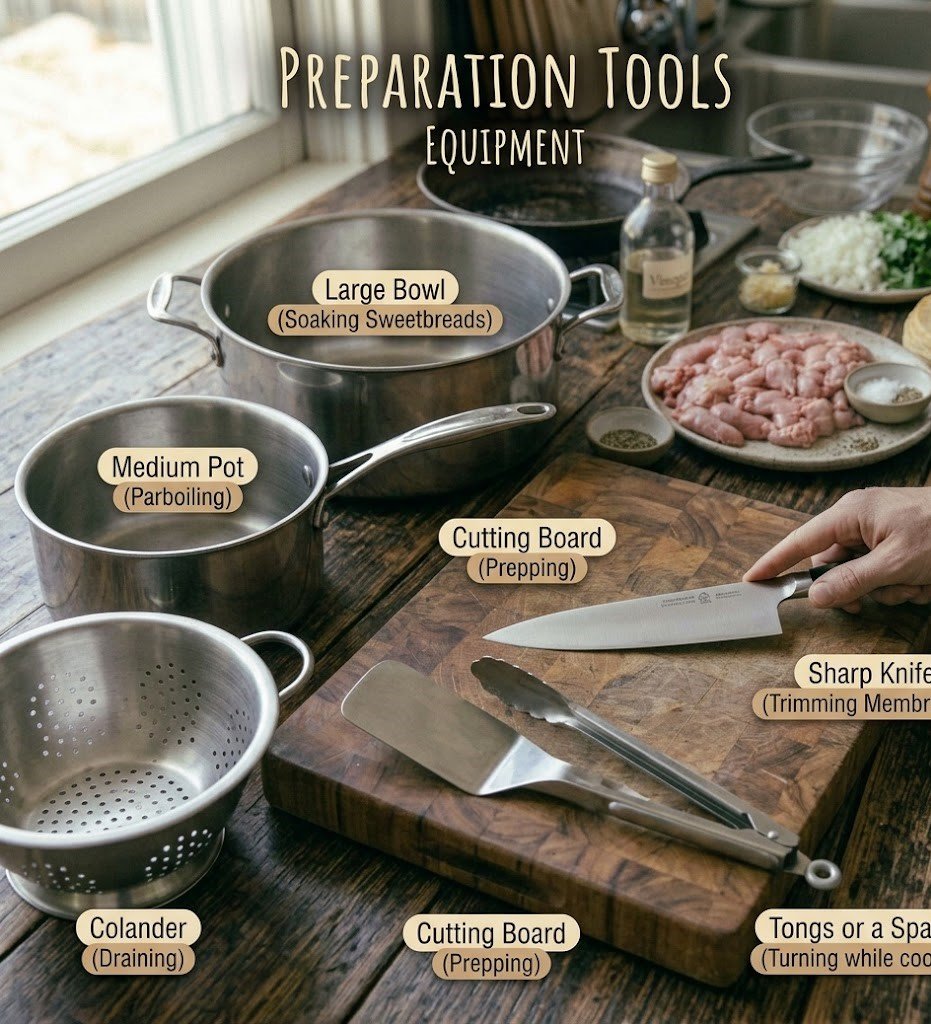
| Equipment | Purpose |
|---|---|
| Large bowl | Soaking sweetbreads |
| Medium pot | Parboiling |
| Colander | Draining |
| Cutting board | Prepping |
| Sharp knife | Trimming membranes |
| Large skillet or pan | Cooking |
| Tongs or spatula | Turning while cooking |
How to Prepare Mollejas de Res
Preparation is the most important part of the process. Taking time here ensures better flavor and texture.
Soaking the Sweetbreads
Place the sweetbreads in a bowl and cover them with cold water. Let them soak for at least 1 hour. This step removes excess blood and impurities, improving both taste and texture.
If the water becomes cloudy, replace it and soak again.
Parboiling the Sweetbreads
Transfer the soaked sweetbreads to a pot of fresh water. Add a little salt and vinegar, then bring to a gentle boil.
Let them simmer for about 10 minutes until they turn pale and slightly firm.
Cooling and Cleaning
After boiling, immediately place the sweetbreads in cold water. This stops the cooking process and makes them easier to handle.
You will notice a thin outer membrane. Carefully peel this off using your fingers or a knife. Remove any tough or gristly parts.
Chopping
Cut the cleaned sweetbreads into bite-sized pieces. If some pieces are thick, slice them lengthwise to ensure even cooking.
Step-by-Step Cooking Instructions
Step 1: Heat the Pan
Place a large skillet over medium heat and add oil or butter. Allow it to heat until shimmering but not smoking.
Step 2: Add Garlic
Add minced garlic and sauté briefly until fragrant. This builds a base flavor without overpowering the dish.
Step 3: Cook the Mollejas
Add the prepared sweetbreads in a single layer. Avoid overcrowding the pan. Let them cook undisturbed for a few minutes before turning.
Step 4: Brown the Sweetbreads
Turn the pieces occasionally to ensure even cooking. Continue cooking until all sides develop a golden-brown crust.
Step 5: Season the Dish
Sprinkle salt and black pepper over the sweetbreads. Keep seasoning simple to let the natural flavor stand out.
Step 6: Crisp the Exterior
Allow the sweetbreads to cook until the outside becomes crispy. This usually takes about 10–15 minutes total.
Step 7: Add Lemon Juice
Drizzle fresh lemon or lime juice over the cooked mollejas. This adds brightness and balances the richness.
Step 8: Warm the Tortillas
If serving as tacos, warm the tortillas in a dry skillet or directly over a flame until soft and pliable.
Step 9: Assemble
Place the cooked mollejas into tortillas and top with chopped onion, cilantro, and salsa if desired.
Cooking Methods
While pan-frying is the most accessible method, mollejas can also be cooked in other ways:
- Grilling: Cook slowly over medium heat until crispy outside and tender inside.
- Deep frying: Creates a very crispy texture but requires careful temperature control.
- Roasting: A less common method, but still effective for even cooking.
Each method produces slightly different textures, but the key remains the same: cook gently and avoid overcooking.
Common Mistakes
- Skipping the soaking step: This can result in a stronger flavor and uneven texture.
- Not removing membranes: Leaves tough, chewy parts in the final dish.
- Overcooking: Makes the sweetbreads dry instead of creamy.
- Using too much seasoning: Overpowers the natural taste.
Seasonings and Marinades
Mollejas are best when kept simple. Salt, pepper, and a touch of citrus are often enough.
Some cooks like to marinate them briefly in buttermilk or citrus juice. This can add subtle flavor, but it’s optional and should not dominate the dish.
Best Ways to Serve Mollejas de Res
Mollejas are versatile and can be served in several ways:
- Tacos: The most popular option, served with onions, cilantro, and lime.
- Argentine-style: Grilled and served with chimichurri.
- Simple skillet dish: Paired with garlic, herbs, and lemon.
- Gourmet plating: Served with sauces and vegetables.
What to Serve with Mollejas de Res
Because mollejas are rich, they pair best with lighter sides:
- Rice or beans
- Fresh salads
- Grilled vegetables
- Roasted potatoes
Acidity from lime or vinegar-based sauces helps balance the richness.
Nutrition Benefits of Mollejas de Res
Sweetbreads are nutrient-dense and provide:
- High-quality protein
- Vitamin B12
- Iron and zinc
- Healthy fats
They are filling and satisfying, though they should be enjoyed in moderation due to their richness.
Storage Tips
Mollejas are highly perishable and should be cooked within one day of purchase.
- Refrigeration: Store cooked mollejas in an airtight container for up to 2 days.
- Reheating: Reheat gently in a skillet to maintain texture.
- Freezing: Not recommended, as it affects texture.
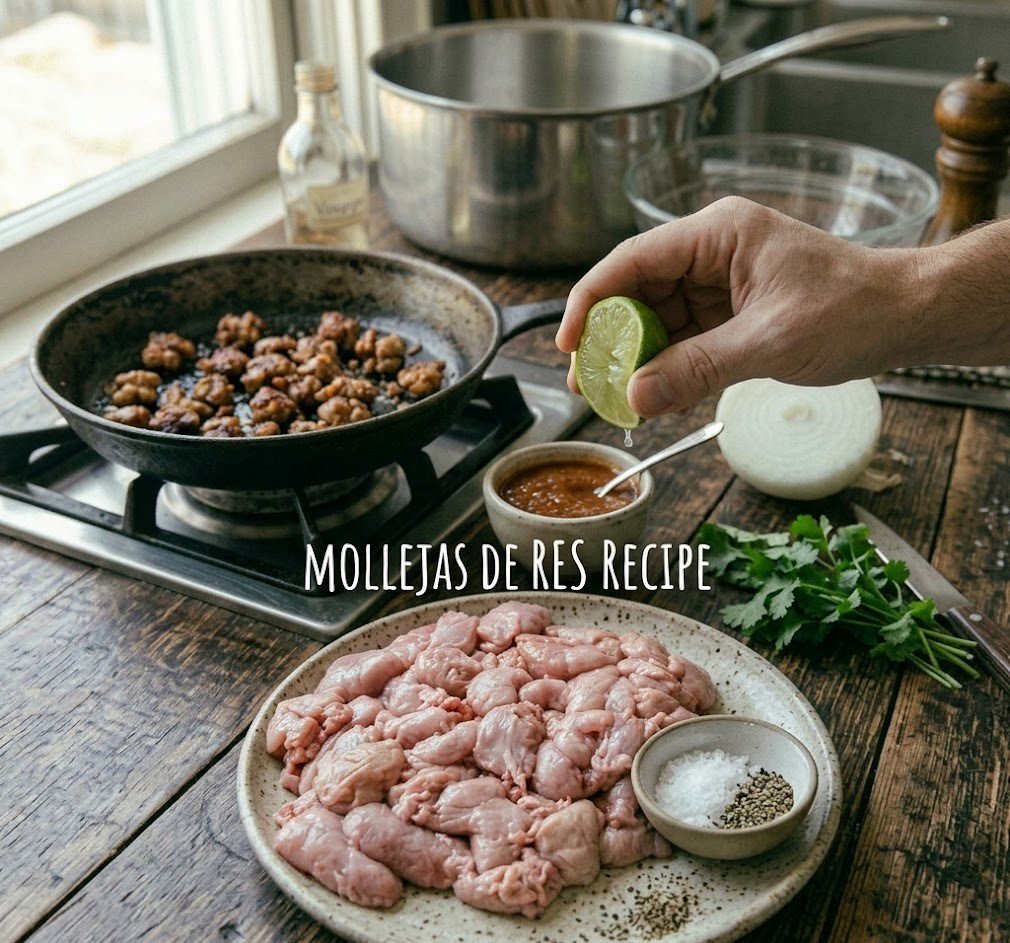
Mollejas De Res Recipe
Ingredients
Equipment
Method
- Place the sweetbreads in a large bowl and cover with cold water. Soak for at least 1 hour, then drain.

- Transfer to a pot, cover with fresh water, add salt and vinegar, and simmer for 10 minutes until firm and pale.

- Remove and place in cold water to stop cooking.

- Peel off the outer membrane and trim any tough parts.

- Cut the sweetbreads into bite-sized pieces.

- Heat oil or butter in a skillet over medium heat.

- Add garlic and cook until fragrant.

- Add sweetbreads and cook in a single layer.

- Turn occasionally until golden brown and crispy (about 10–15 minutes).

- Season with salt and pepper.

- Drizzle with lemon or lime juice.

- Warm tortillas in a skillet.

- Assemble tacos with sweetbreads, onion, cilantro, and salsa. Serve immediately.

Notes
- Always soak sweetbreads before cooking for best flavor and texture.
- Do not overcook, or they may become dry.
- Cook within 1 day of purchase for freshness.
- Best served hot for maximum crispiness.
What are mollejas de res?
Mollejas de res are beef sweetbreads, which come from the cow’s thymus gland or pancreas.
Do you need to soak sweetbreads before cooking?
Yes, soaking helps remove blood and improves both flavor and texture.
How do you know when mollejas are cooked?
They are done when the outside is golden and crispy, and the inside is tender but firm.
What do mollejas taste like?
They have a mild, buttery flavor with a creamy texture inside and crispy edges outside.
How long do you cook mollejas?
Typically 10–15 minutes when pan-fried, or longer if grilled, depending on size and method.
Conclusion
Mollejas de res may seem intimidating at first, but they are incredibly rewarding to cook.
With proper preparation and careful cooking, they transform into a dish that is crispy, creamy, and deeply flavorful.
By following the steps in this guide—soaking, cleaning, cooking slowly, and keeping seasoning simple—you can confidently prepare this traditional delicacy at home.
Whether served in tacos or on their own, mollejas offer a unique and memorable culinary experience that stands apart from everyday cuts of meat.



Pingback: Onion Soup Mix Recipe - Heaven Bite Recipes