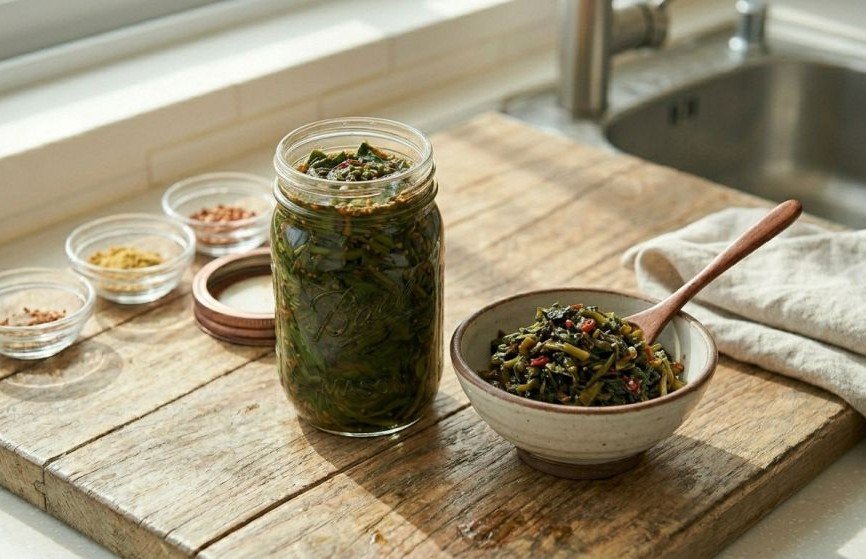
The first time I tasted Karashi Takana, I honestly thought it was just another pickled vegetable sitting beside a bowl of ramen.
Then I took one bite, and everything changed. The salty, tangy, slightly spicy flavor instantly woke up my taste buds.
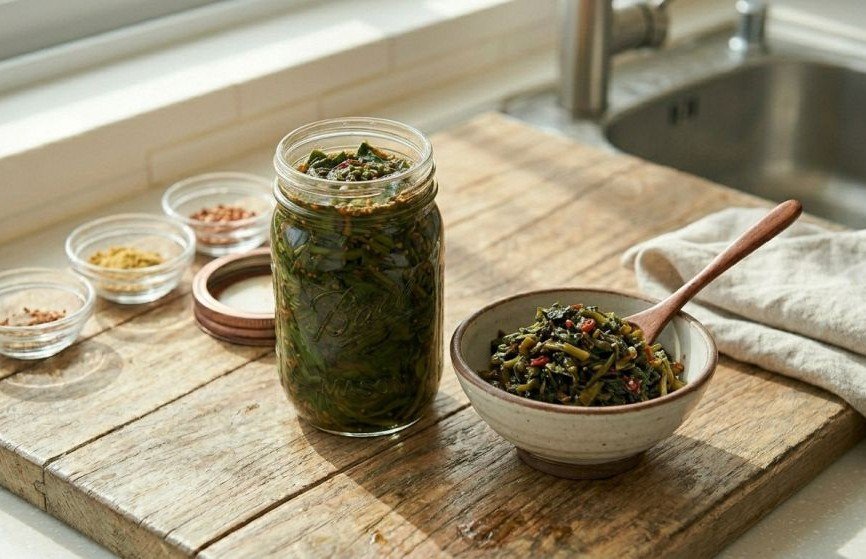
Karashi Takana is a traditional Japanese condiment made from pickled mustard greens.
It comes from the Kyushu region of Japan, especially around areas like Kyushu, where rich tonkotsu ramen and fermented foods are deeply connected to local food culture.
What I love most about this recipe is how simple it is. There are no complicated techniques, no expensive equipment, and no special culinary skills required.
Yet the final result tastes like something you would find at a small ramen shop in Japan.
Today, I’m sharing the version I make at home whenever I want a flavorful topping for ramen, rice bowls, fried rice, or onigiri.
Recipe Overview
| Detail | Information |
|---|---|
| Course | Side Dish |
| Cuisine | Japanese |
| Prep Time | 20 Minutes |
| Fermentation Time | 24 Hours |
| Servings | 4 People |
What Is Karashi Takana?
Karashi Takana is a Japanese pickle made from mustard greens, known botanically as Brassica juncea.
The word “Karashi” means Japanese mustard, while “Takana” refers to the mustard greens themselves.
Traditionally, the greens are salted, pressed, and fermented before being mixed with ingredients like rice vinegar, sesame oil, soy sauce, and mustard powder.
In Japan, especially in the Kyushu region, Karashi Takana is commonly served alongside ramen. Many ramen shops place jars of it directly on tables so customers can add as much as they like.
I think that’s one reason it became so popular. A small spoonful can completely transform an ordinary bowl of noodles.
Why You’ll Love This
There are plenty of reasons why I keep making this recipe again and again.
- Easy for beginners
- Naturally vegan
- Budget-friendly ingredients
- Great meal-prep recipe
- Keeps well in the refrigerator
- Works with ramen, rice, and fried rice
- Adjustable spice level
- Traditional Japanese flavor
The best part is that the flavor actually improves after a day or two in the fridge.
Ingredients You Need
| Ingredient | Quantity |
|---|---|
| Fresh mustard greens | 1 pound (450g) |
| Coarse sea salt | 2 tablespoons |
| Rice vinegar | 2 tablespoons |
| Soy sauce | 1 tablespoon |
| Karashi powder (Japanese mustard powder) | 1–2 teaspoons |
| Toasted sesame oil | 1 teaspoon |
| Sugar | 1 teaspoon |
| Red pepper flakes (optional) | ½ teaspoon |
Equipment Needed
| Equipment | Purpose |
|---|---|
| Large mixing bowl | Mixing greens |
| Colander | Draining water |
| Kitchen towel | Removing moisture |
| Measuring spoons | Accurate measurements |
| Small bowl | Mixing brine |
| Glass jar | Fermentation and storage |
| Heavy plate or pot | Pressing greens |
The History of Karashi Takana
Takana has a long history in Japan dating back hundreds of years. Historians believe mustard greens arrived from China during the Heian Period.
Over time, Japanese farmers cultivated their own varieties. In Kyushu, preserving vegetables through fermentation became an important survival technique before refrigeration existed.
Today, Karashi Takana remains one of the most recognizable pickled foods served with Hakata-style and Kumamoto-style ramen.
According to Japanese food researchers, fermented vegetables continue to play an important role in traditional Japanese diets because they help preserve seasonal produce while creating unique flavors.
How to Make Karashi Takana
Step 1: Wash the Greens
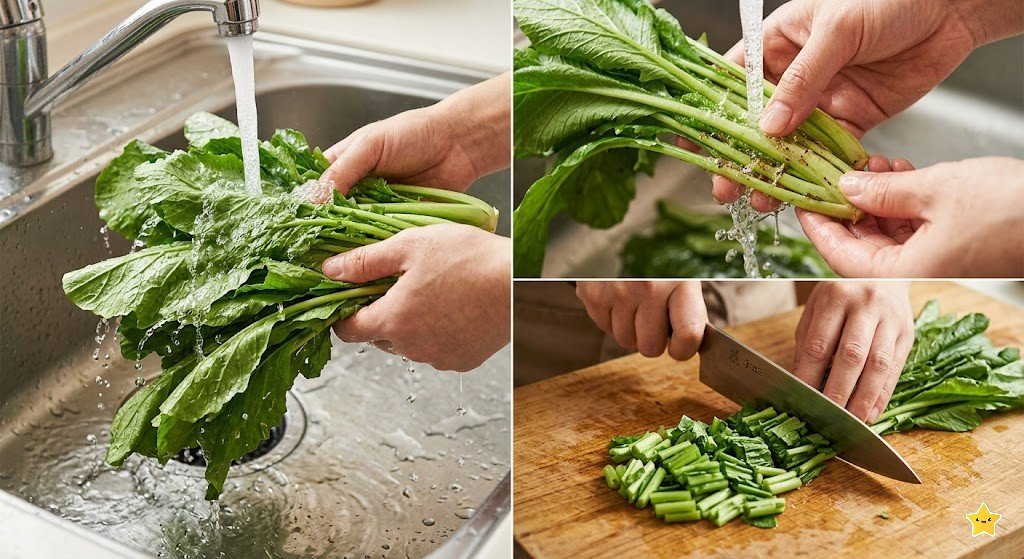
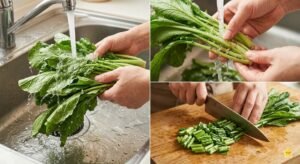
I start by washing the mustard greens thoroughly under cold running water.
Sometimes dirt hides near the stems, so don’t rush this part.
Chop everything into bite-sized pieces.
Step 2: Salt the Greens
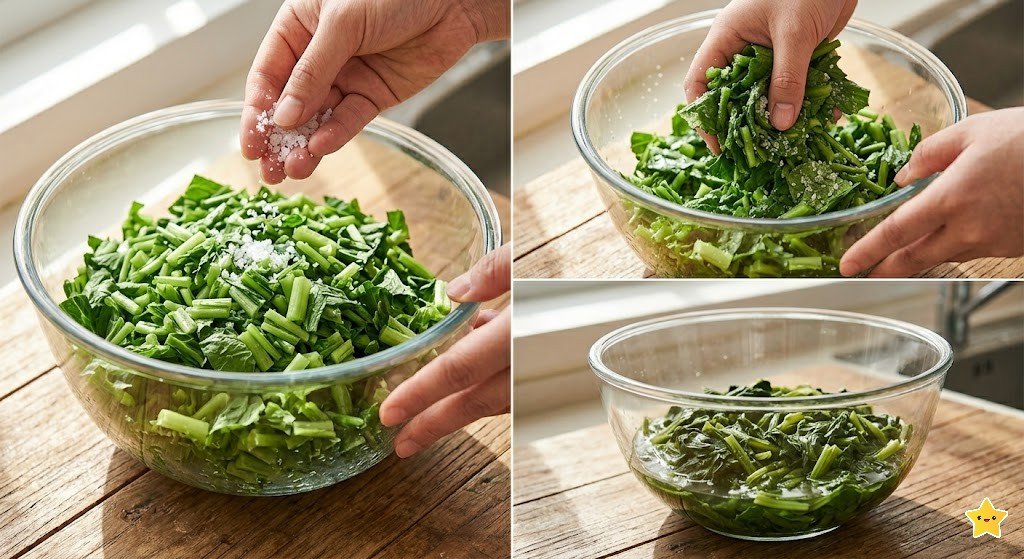
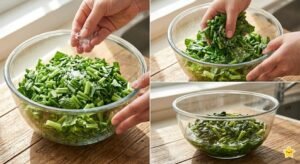
Place the chopped greens in a large bowl.
Sprinkle the coarse sea salt evenly over them and mix well using your hands.
Let them sit for about 30 minutes.
You’ll notice the leaves start wilting pretty quickly.
Step 3: Press and Drain
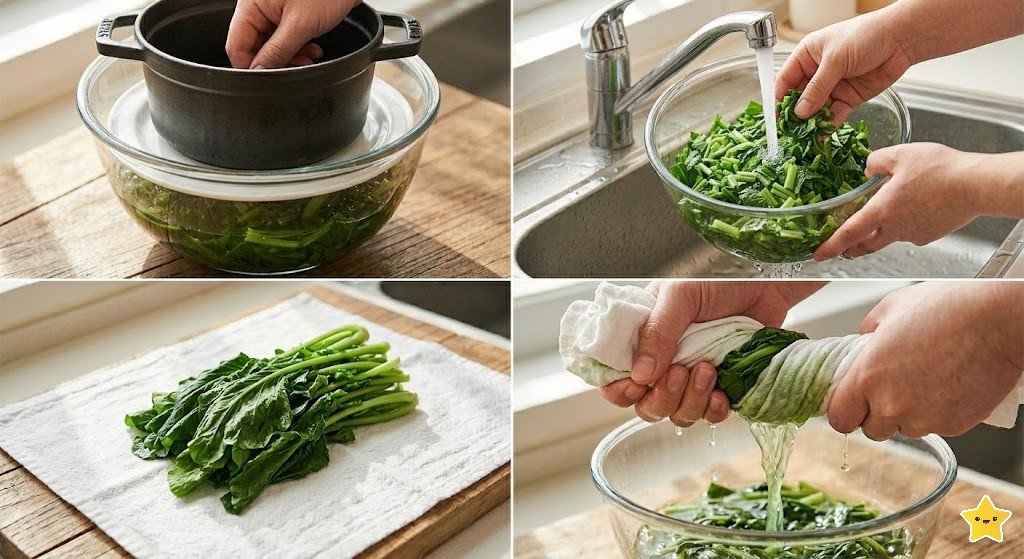
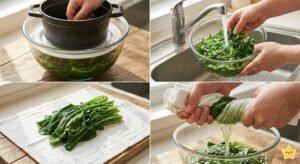
Place a heavy plate or pot over the greens.
This helps remove excess moisture.
After 30 minutes, rinse the greens under cold water and squeeze out as much liquid as possible.
I usually use a clean kitchen towel for this.
Step 4: Make the Brine
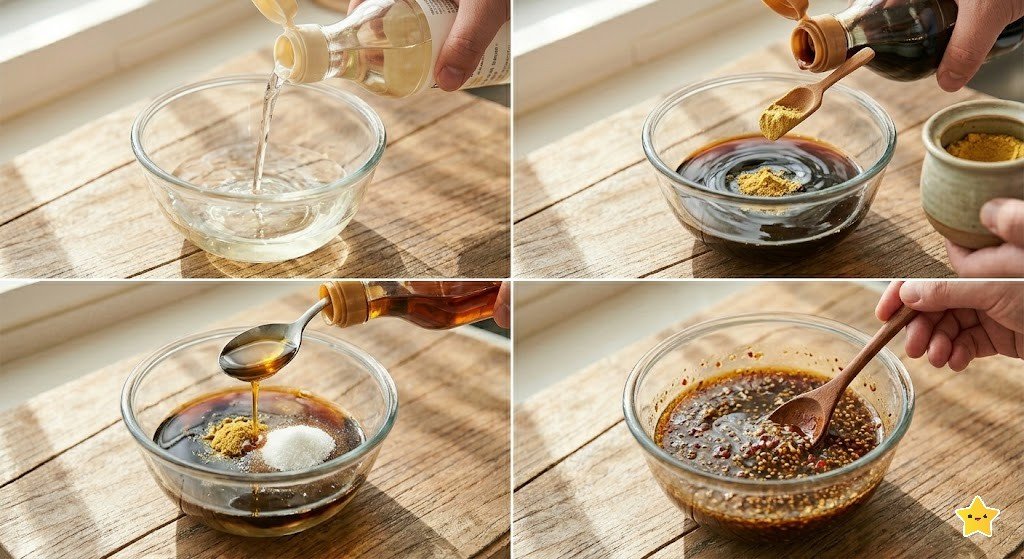
In a separate bowl, combine:
- Rice vinegar
- Soy sauce
- Karashi powder
- Sesame oil
- Sugar
- Red pepper flakes
Mix until everything is fully combined.
The smell at this stage is amazing, honestly.
Step 5: Combine Everything
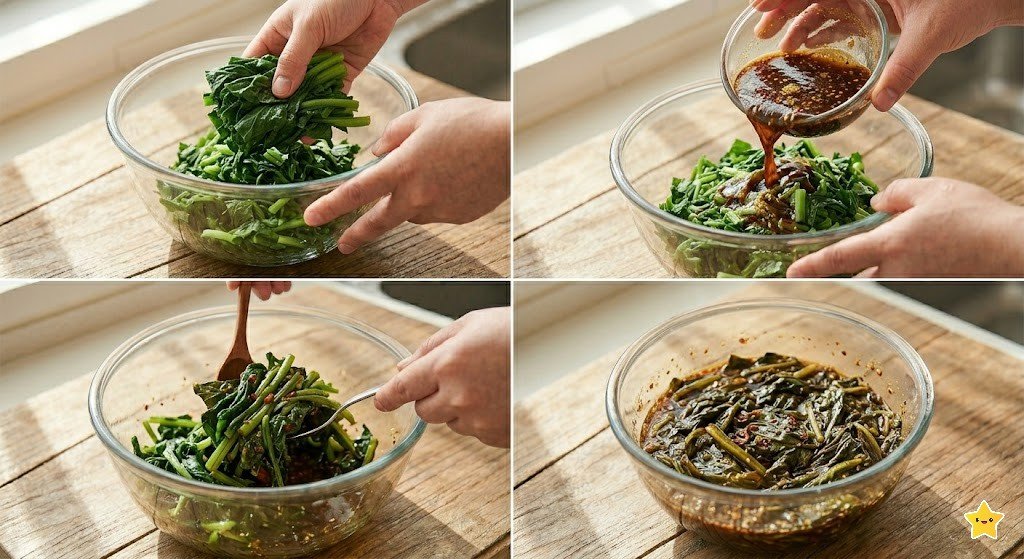
Return the drained greens to your mixing bowl.
Pour the brine over them and toss until evenly coated.
Make sure every piece gets covered.
Step 6: Pack Into a Jar
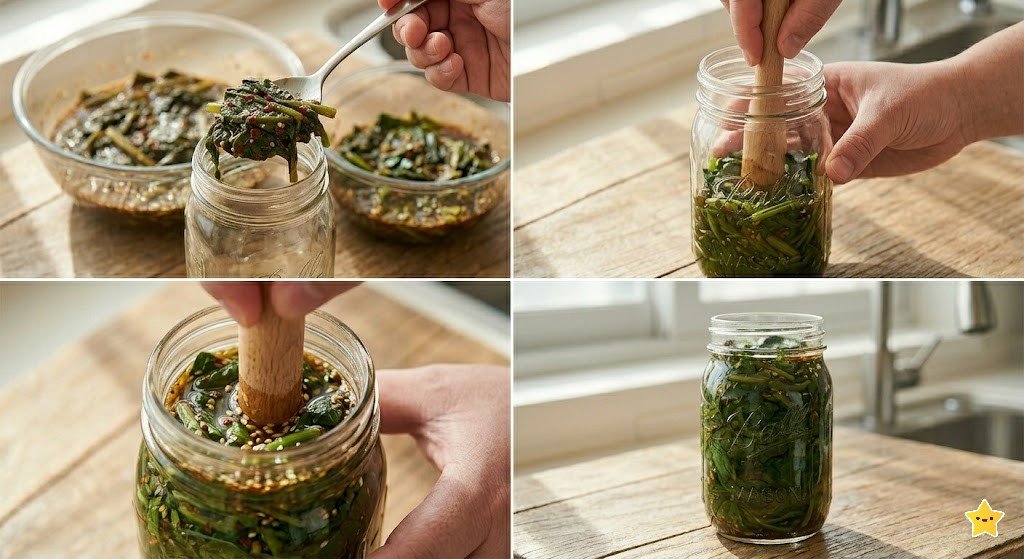
Transfer the mixture into a clean glass jar.
Press everything down firmly.
The greens should be compact and slightly submerged in their own liquid.
Step 7: Refrigerate
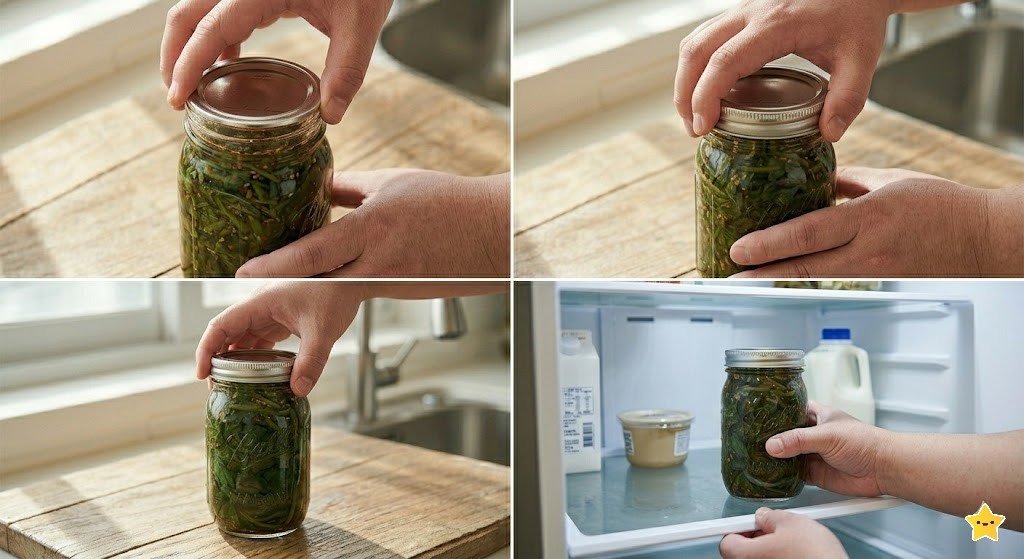
Seal the jar and refrigerate for at least 24 hours.
You can technically eat it sooner, but the flavor won’t be nearly as good.
How Long Should You Ferment Karashi Takana?
Different fermentation times create different flavors.
| Method | Time | Flavor |
|---|---|---|
| Quick pickle | 24 hours | Fresh and mildly tangy |
| Traditional ferment | 3–7 days | Rich and complex |
| Deep ferment | 7+ days | Strong and sour |
Personally, I prefer about 4 days.
It gives the perfect balance between freshness and fermentation.
What Does Karashi Takana Taste Like?
Many people compare it to kimchi, but I think they’re actually quite different.
Karashi Takana has:
- Tangy acidity
- Mild bitterness
- Savory umami flavor
- Gentle mustard heat
- Slight fermentation funk
Unlike kimchi, the spice doesn’t hit immediately.
Instead, it slowly develops as you continue eating.
Karashi Takana vs Kimchi
Although both foods are fermented vegetables, there are important differences. Kimchi typically uses Napa cabbage and Korean chili flakes.
Karashi Takana uses mustard greens and Japanese mustard powder. Kimchi often contains fish sauce or shrimp paste.
Karashi Takana is usually vegan and lighter in flavor. Both are delicious, but they offer very different eating experiences.
Best Ways to Use Karashi Takana
Once I have a jar in the fridge, I start adding it to almost everything.
Ramen
This is the classic use.
A spoonful adds brightness to rich pork-based broths.
Rice Bowls
Steamed rice and Karashi Takana make a surprisingly satisfying meal.
Onigiri
Finely chop the pickles and use them as a rice ball filling.
Fried Rice
Karashi Takana is a key ingredient in Takana Chahan, a popular fried rice dish from Kyushu.
Expert Tips
- Always squeeze out excess moisture.
- Use fresh mustard greens.
- Don’t skip the sesame oil.
- Taste the brine before adding it.
- Let it rest at least 24 hours.
- Use a clean spoon every time you serve it.
I learned the hard way that extra water can make the pickle taste weak and diluted.
How to Store Karashi Takana
Store it in an airtight glass container inside the refrigerator.
Properly stored Karashi Takana usually lasts:
- 2 weeks for quick pickles
- 3–4 weeks for fermented batches
Always check for unusual odors before eating.
Nutrition Information
- Calories: 35
- Protein: 1g
- Carbohydrates: 4g
- Fat: 2g
- Fiber: 1g
- Sodium: 450mg
- Vitamin A: High
- Vitamin C: Moderate
- Calcium: Small amount
- Iron: Small amount
Mustard greens are naturally rich in antioxidants, vitamin K, and plant compounds associated with healthy digestion.
Karashi Takana Recipe
Ingredients
Equipment
Method
- Wash the mustard greens thoroughly under cold water. Remove any damaged leaves and chop into bite-sized pieces.
- Place the greens in a large bowl, sprinkle with coarse sea salt, and toss well. Let sit for 30 minutes until softened.
- Rinse the greens under cold water and squeeze out as much moisture as possible using a kitchen towel.
- In a small bowl, combine rice vinegar, soy sauce, karashi powder, sesame oil, sugar, and red pepper flakes. Stir until fully mixed.

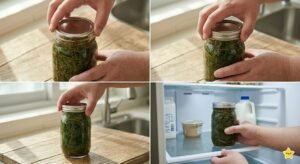
- Mix the drained greens with the prepared brine. Transfer to a clean glass jar, press down firmly, seal, and refrigerate for at least 24 hours before serving.
Notes
- For a stronger fermented flavor, allow the mixture to sit for 3–5 days in the refrigerator.
- Bok choy can be used as a substitute for mustard greens.
- Always use a clean spoon when serving to extend shelf life.
- Delicious served with ramen, steamed rice, fried rice, or onigiri.
- Store in an airtight container in the refrigerator for up to 4 weeks.
FAQs:-
Is Karashi Takana Vegan?
Yes. This homemade version contains no animal products.
How long does Karashi Takana last in the fridge?
Homemade Karashi Takana typically stays fresh for 2 to 4 weeks when stored in an airtight container in the refrigerator.
Is Karashi Takana spicy?
Yes, it has a mild to moderate heat from Japanese mustard powder, but it’s usually less spicy than kimchi.
Can I use bok choy instead of mustard greens?
Yes, bok choy is one of the best substitutes if mustard greens are unavailable, though the flavor will be slightly milder.
What do you eat with Karashi Takana?
Karashi Takana is commonly served with ramen, steamed rice, fried rice, onigiri, and other Japanese dishes.
Conclusion:-
I really enjoy making Karashi Takana because it’s one of those recipes that delivers huge flavor with very little effort. A few simple ingredients become something surprisingly complex after a little time and patience.
Whether you’re topping a bowl of ramen, making Takana Chahan, or simply eating it with steamed rice, this traditional Japanese pickle brings authentic Kyushu flavor straight into your kitchen.
If you’ve never made fermented vegetables before, this is honestly a great place to start. It’s forgiving, affordable, and the results are absolutely worth the wait.