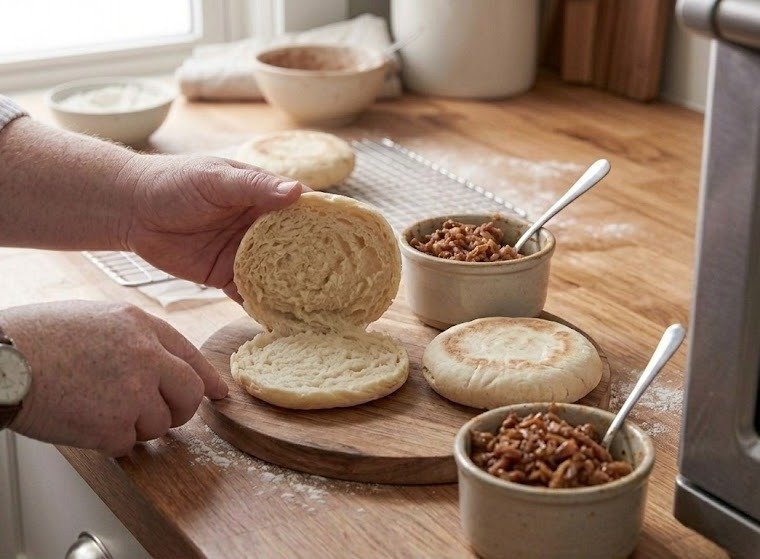

Welcome, today I’m sharing my favorite way to make Rougamo bread, the crispy and layered Chinese flatbread used in the famous Roujiamo sandwich.
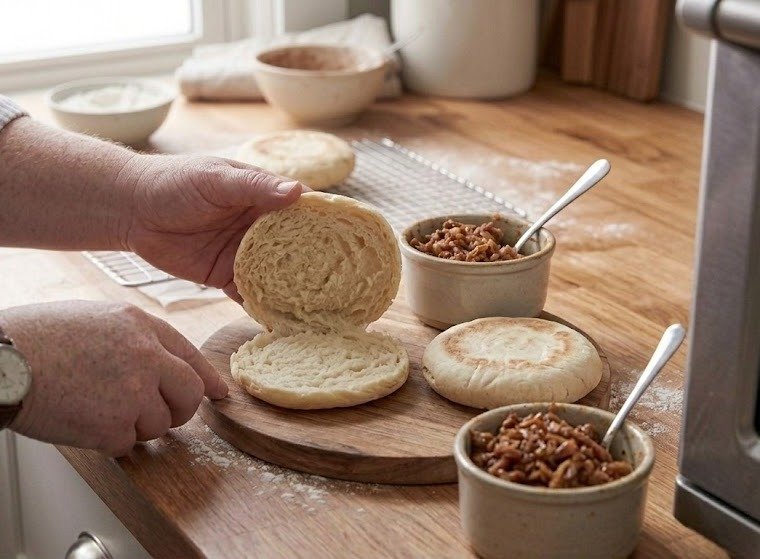
When I first tried making it at home, I was surprised by how simple the ingredients were, yet the texture turned out incredibly flaky and delicious.
This recipe walks through every step from preparing the dough to shaping the layers and cooking the bread until golden and crisp.
Hi, my name is Dipendra Kumar. I like cooking food for my family and relatives. My relative calls me a pro chef. I uploaded videos on social media.
If you enjoy trying traditional street foods at home, this Rougamo bread recipe is definitely worth making.
Recipe Overview
- Cuisine: Chinese
- Preparation Time: 30 minutes
- Rest Time: 1 hour 30 minutes
- Cook Time: 25 minutes
- Total Time: 2 hours 25 minutes
- Servings: 6 breads
What Is Rougamo Bread?
Rougamo bread, also called Baijimo, is a traditional Chinese flatbread that originated in Shaanxi province, especially the city of Xi’an.
It is most commonly used to make the famous street food sandwich known as Roujiamo, in which tender braised meat is stuffed into bread.
The bread is known for its crispy outside and soft layered interior. It is pan-fried first and then baked, which helps create its signature texture.
Each bite combines crunch and chewiness, making it a perfect base for juicy fillings.
Why You’ll Love This
This recipe is simple but produces authentic results. I enjoy making it because the dough is easy to handle and the cooking method creates beautiful flaky layers.
The bread becomes crispy on the outside while staying soft inside. Another reason I like this recipe is that it works well with many fillings like braised pork, beef, chicken, or even vegetables.
It also uses pantry ingredients that are easy to find, so you do not need special items to make it at home.
Ingredients
Below are the ingredients needed to prepare the dough for this recipe.
| Optional, but improves flavor | Ingredient | Notes |
|---|---|---|
| 500 g | All-purpose flour | Main base of the bread |
| 5 g | Baking powder | Helps bread puff slightly |
| 250 g | Warm water | Used to form dough |
| 5 g | Salt | Optional but improves flavor |
| 60–80 g | Melted lard | Creates flaky layers |
| As needed | Extra lard | Used for brushing and pan cooking |
Equipment
These tools make the preparation easier and help achieve better results.
| Amount | Equipment | Notes |
|---|---|---|
| 1 | Large mixing bowl | For mixing dough |
| 1 | Rolling pin | Used to roll thin dough sheets |
| 1 | Sharp knife | For cutting thin strands |
| 1 | Pastry brush | Used to spread lard evenly |
| 1 | Flat pan or skillet | For pan-frying bread |
| 1 | Baking tray | For oven baking |
| 1 | Kitchen scale | Ensures accurate measurements |
| 1 | Kitchen towel | Keeps dough covered during resting |
Preparation and Cooking Time
Preparing Rougamo bread takes a little patience because the dough needs proper resting time.
This resting stage helps develop gluten, which allows the dough to stretch into thin layers.
The active preparation time is about 30 minutes, but including resting and cooking, the total time comes to around two hours.
Once the dough is ready, cooking the bread itself is fairly quick.
How to Make Rougamo Bread
Step 1: Make the Dough
In a large bowl, combine flour, baking powder, and salt. Gradually pour in the warm water while mixing with your hand or spoon until a rough dough forms.
Knead the dough for about 10 minutes until it becomes smooth and firm. Cover the dough with a damp cloth and allow it to rest for 20 minutes.
Step 2: Second Knead and Long Rest
After resting, knead the dough again for 3 to 5 minutes until it becomes smoother and elastic.
Cover the dough again and let it rest at room temperature for one hour. This rest period helps relax the gluten so the dough can be rolled thin later.
Step 3: Divide the Dough
Transfer the dough to a clean work surface and divide it into 3 to 4 equal portions.
Keep the unused pieces covered with a cloth to prevent drying while working on one portion at a time.
Step 4: Roll into a Very Long Thin Sheet
Take one portion of dough and roll it into a long strip using your hands. Then use a rolling pin to roll it into a very thin sheet.
The dough should be extremely thin, almost translucent. Ideally, it should stretch to about 1.5–2 meters in length.
Step 5: Brush with Lard and Begin Rolling
Use a pastry brush to spread a thin layer of melted lard across the surface of the dough sheet.
Start rolling the dough loosely from one end, creating a spiral log. Stop when you reach about halfway through the sheet.
Step 6: Cut into Fine Strands
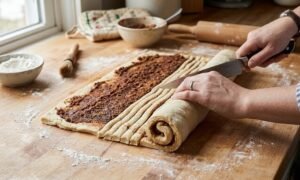
Using a sharp knife, cut the remaining unrolled portion of the dough into thin noodle-like strands.
Brush these strands lightly with lard so they do not stick together.
Step 7: Finish Rolling
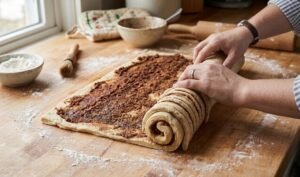
Continue rolling the remaining dough so the strands wrap around the log.
This technique creates multiple delicate layers that will become crispy during cooking.
Step 8: Shape and Divide
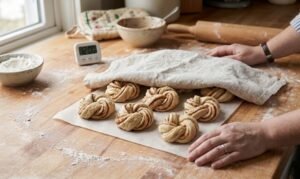
Twist the rolled dough gently and break it into two smaller pieces.
Cover them and let them rest for about 10 minutes so the dough relaxes before flattening.
Step 9: Flatten and Roll into Rounds
Press each piece down slightly with your palm and then roll it into a round disk about 1–1.5 cm thick.
Do not worry about making perfect circles since rustic shapes are traditional.
Step 10: Pan-Fry the Bread
Heat a flat pan over medium-low heat. Place the dough rounds in the pan and cook until lightly golden on one side.
Flip and cook the other side until both surfaces have light brown spots.
Step 11: Bake the Bread
Preheat your oven to 230°C (450°F).
Place the pan-fried bread on a baking tray and bake for about 10–15 minutes until the bread puffs slightly and becomes crispy.
Step 12: Cool and Serve
Allow the bread to cool for a few minutes. Slice each piece halfway open to create a pocket for fillings.
The bread should have a crispy crust and soft, layered interior.
Cooking Methods — Traditional vs Modern Techniques
Traditional Rougamo bread is cooked in clay ovens similar to tandoors. Street vendors often cook the bread on hot griddles before finishing it in the oven.
Modern kitchens typically use a combination of a skillet and an oven. This method recreates the same crisp exterior and soft interior.
Some cooks also use air fryers, though pan frying followed by baking gives the best texture.
Flavor Variations and Popular Fillings
Rougamo bread can be paired with many different fillings depending on preference.
Traditional versions use slow-cooked, braised pork belly with spices. Some regions use beef or lamb for a stronger flavor.
Vegetarian options also work well with sautéed mushrooms, tofu, or roasted vegetables.
You can also experiment with fusion flavors like barbecue chicken or spicy shredded beef.
Serving Suggestions and Pairings
Rougamo bread is typically served warm and filled with chopped meat and herbs.
It pairs well with light side dishes like cucumber salad, pickled vegetables, or clear soup.
Hot tea is also a popular beverage choice because it balances the richness of the bread and meat filling.
Essential Tips for Perfect Rougamo Bread
The most important tip is rolling the dough extremely thin. Thin dough creates more layers and a better flaky texture.
Using lard instead of oil greatly improves the flavor and crispiness of the bread.
Always cook the bread over medium-low heat so it browns evenly without burning.
Finally, make sure the oven is fully preheated before baking to help the bread puff and crisp properly.
Storage and Reheating Guidance
Rougamo bread can be stored at room temperature for up to two days in an airtight container.
If you want to keep it longer, place the bread in the freezer, where it can last for about one month.
To reheat, bake the bread in a 200°C oven for 5–7 minutes. This helps restore the crispy texture.
Avoid reheating in the microwave because it can make the bread soft and chewy.
Nutritional Information
Below are approximate nutritional benefits per serving:
- Calories: about 380–420 kcal
- Carbohydrates: provide energy from wheat flour
- Protein: a small amount from flour and filling
- Fat: mainly from lard used for layering
- Iron: present in wheat flour
- Fiber: a small amount from wheat flour
- Sodium: moderate, depending on salt used
Rougamo Bread Recipe
Ingredients
Equipment
Method
- In a large bowl, mix the flour, baking powder, and salt. Gradually add warm water and mix until a rough dough forms.
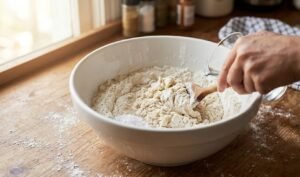
- Knead the dough for about 10 minutes until smooth and firm. Cover with a damp towel and rest for 20 minutes.
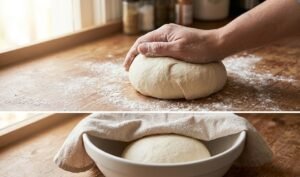
- Knead the dough again for 3–5 minutes to improve elasticity. Cover and let it rest for 1 hour.
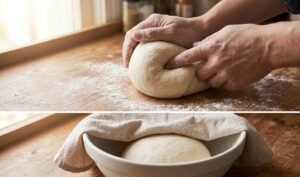
- Divide the dough into 3–4 equal pieces. Keep unused portions covered so they do not dry out.

- Roll one dough portion into a long thin sheet using a rolling pin. The sheet should be very thin and slightly translucent.
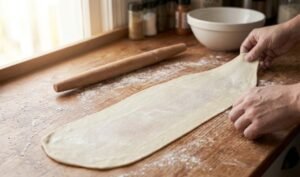
- Brush the entire sheet with a thin layer of melted lard.
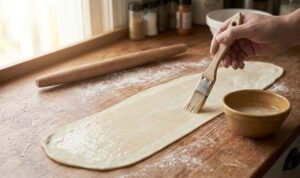
- Roll the dough sheet into a loose log from one side until halfway.
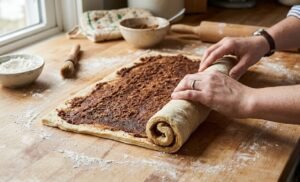
- Cut the remaining sheet into thin noodle-like strands using a knife.
- Continue rolling the dough so the strands wrap around the log, creating multiple layers.
- Twist and divide the rolled dough into smaller portions. Let them rest for 10–15 minutes.
- Flatten each portion gently and roll into round discs about 1–1.5 cm thick.

- Heat a skillet on medium-low heat and cook each disc until lightly golden on both sides.

- Transfer the bread to a baking tray and bake in a preheated oven at 230°C (450°F) for 10–15 minutes until crispy.

- Cool slightly before slicing open to create a pocket for fillings.

Video
Notes
FAQs:-
What is Rougamo bread made of?
Rougamo bread is made with simple ingredients like flour, water, baking powder, salt, and lard. These ingredients create a layered dough that becomes crispy outside and soft inside.
What is Rougamo bread made of?
It is made with flour, water, baking powder, salt, and lard.
Why is Rougamo called the Chinese hamburger?
Because meat is stuffed inside the bread like a hamburger bun.
Can I make Rougamo bread without an oven?
Yes, you can cook it fully in a pan on low heat.
How do I store Rougamo bread?
Keep it in an airtight container for up to 2 days or freeze it.
Conclusion:-
I always enjoy making this Rougamo bread recipe because it combines simple ingredients with traditional cooking techniques. The layered dough creates a unique texture that feels both crispy and soft at the same time.
With a little patience during the rolling and resting stages, you can easily recreate this famous Chinese street bread at home and enjoy it with your favorite fillings.
Read More:- Chilis White Cheddar Mac and Cheese Recipe