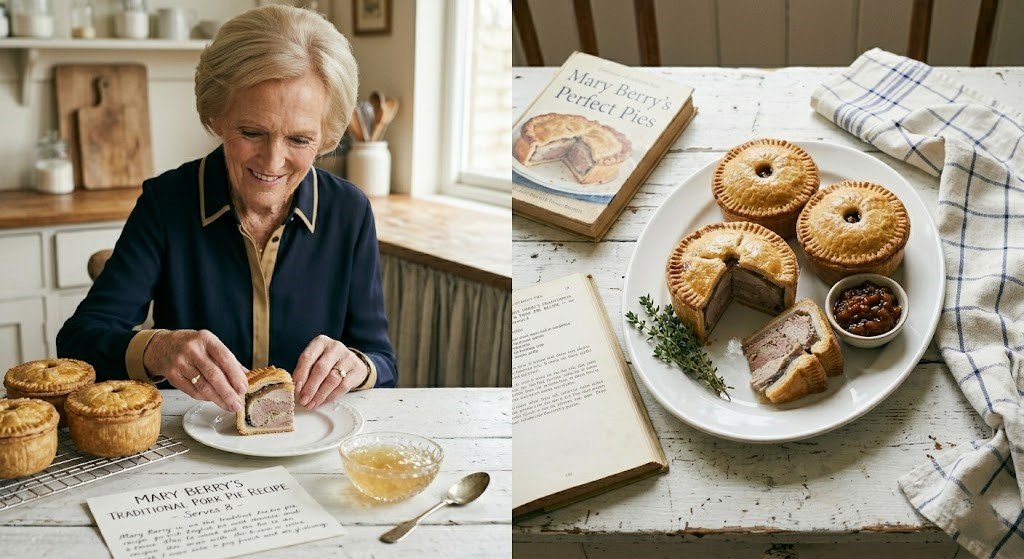

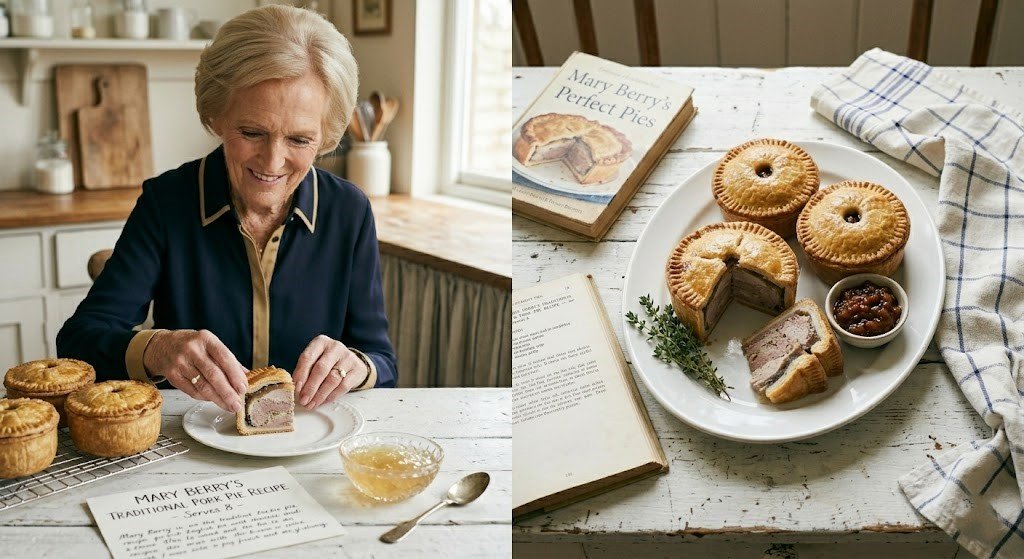
The pork pie is one of Britain’s most recognizable traditional dishes, and the version associated with Mary Berry stands out for its clarity and reliability.
Recipe Overview
Prep Time: 1 hour
Cook Time: 50 minutes
Resting Time: 4 hours
Total Time: 5 hours 50 minutes
Servings: 6 people
Cuisine: British
Course: Main Course
This recipe follows the classic structure: a firm hot water crust pastry filled with seasoned pork and finished with a savory jelly that sets as it cools.
Hi my name is Dpendra Kumar. I am a chef. I like to cook food for my family and relatives.
They called me a pro chef. I uploaded videos on social media.
Unlike many modern shortcuts, this method respects traditional techniques while keeping the process manageable for home cooks.
The result is a pie that holds its shape, slices cleanly, and delivers a balanced combination of crisp pastry and rich filling.
What makes this recipe Different
This version focuses on structure, flavor balance, and texture. The pastry is sturdy but not overly thick, allowing it to support the filling without becoming heavy.
The meat is hand-cut rather than minced, giving a distinct bite and preventing a dense, sausage-like texture.
Seasoning is carefully controlled. Salt, pepper, and herbs enhance the pork without overpowering it.
The jelly is added in measured amounts, ensuring moisture without making the crust soggy.
Ingredients
Hot Water Pastry
| Ingredient | Quantity | Purpose |
|---|---|---|
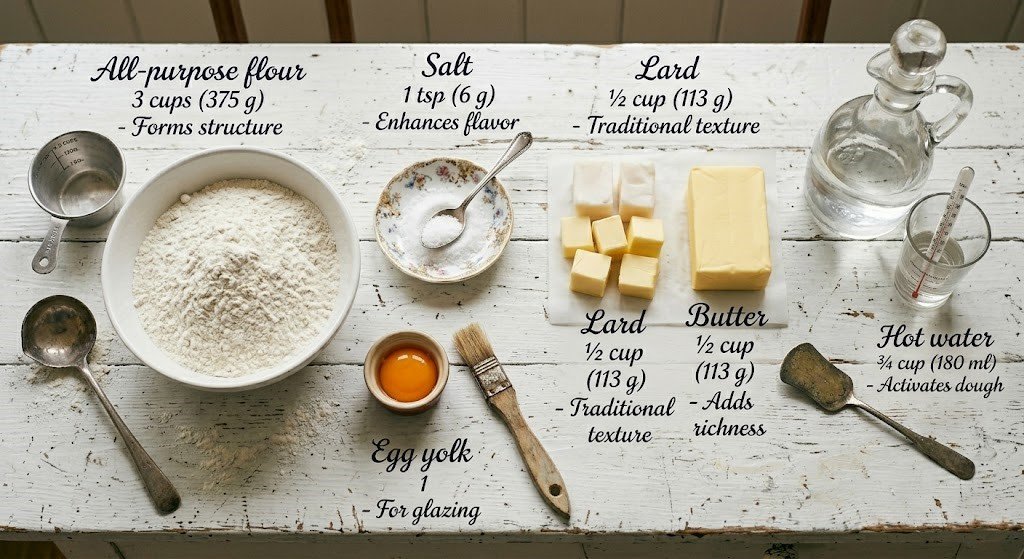
| All-purpose flour | 3 cups (375 g) | Forms the structure of the pastry |
| Salt | 1 tsp (6 g) | Enhances flavor |
| Lard | ½ cup (113 g) | Creates traditional texture |
| Butter | ½ cup (113 g) | Adds richness |
| Hot water | ¾ cup (180 ml) | Activates dough |
| Egg yolk | 1 | For glazing |
Pork Filling
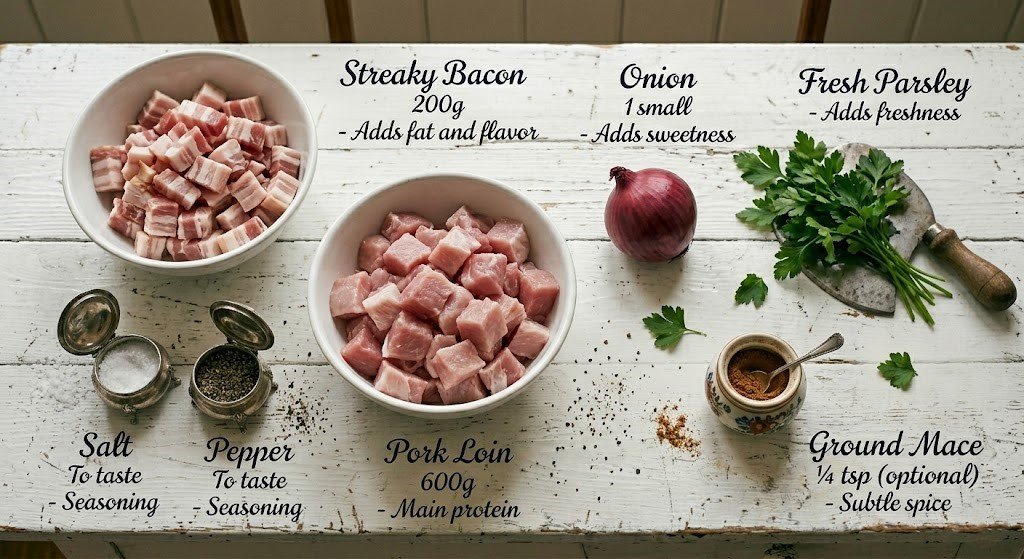
| Ingredient | Quantity | Purpose |
|---|---|---|
| Pork loin | 600 g | Main protein |
| Streaky bacon | 200 g | Adds fat and flavor |
| Onion | 1 small | Adds sweetness |
| Fresh parsley | Small bunch | Adds freshness |
| Salt & pepper | To taste | Seasoning |
| Ground mace (optional) | ¼ tsp | Adds subtle spice |
Jelly
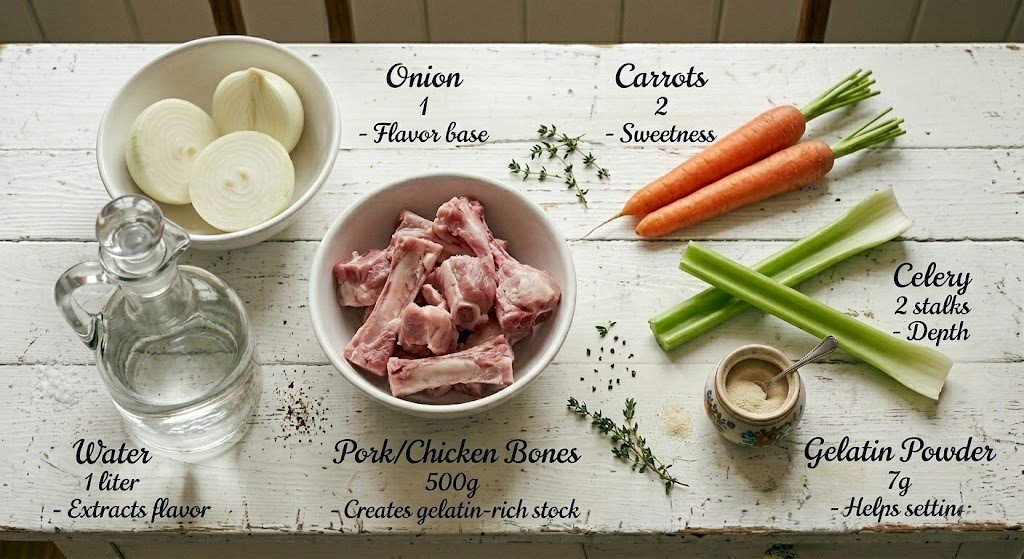
| Ingredient | Quantity | Purpose |
|---|---|---|
| Pork/chicken bones | 500 g | Creates gelatin-rich stock |
| Onion | 1 | Flavor base |
| Carrots | 2 | Sweetness |
| Celery | 2 stalks | Depth |
| Water | 1 liter | Extracts flavor |
| Gelatin powder | 7 g | Helps setting |
Kitchen Equipment
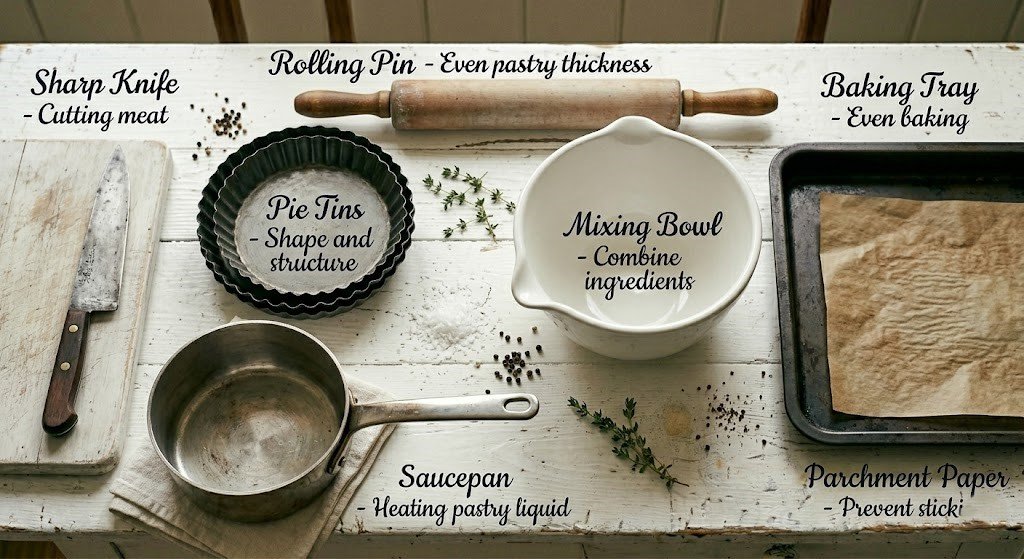
| Equipment | Purpose |
|---|---|
| Pie tins | Shape and structure |
| Rolling pin | Even pastry thickness |
| Mixing bowl | Combine ingredients |
| Sharp knife | Cutting meat |
| Saucepan | Heating pastry liquid |
| Baking tray | Even baking |
| Parchment paper | Prevent sticking |
How to Make this Recipe
Step 1: Make the Hot Water Pastry
Combine flour and salt in a bowl. Heat water, butter, and lard until melted. Pour into flour and mix until a dough forms. Knead lightly while warm until smooth.
Step 2: Line the Pie Tins
Divide the dough and roll each portion. Press into tins evenly, ensuring no air pockets. Leave a slight overhang for sealing.
Step 3: Prepare the Filling
Hand-cut pork and bacon into small pieces. Mix with chopped onion and parsley. Season well and test by frying a small portion.
Step 4: Fill the Pies
Pack the filling firmly into the pastry shells, leaving room for lids. Brush edges with egg yolk.
Step 5: Add the Pastry Lids
Roll out the remaining dough, cut lids, and seal edges. Create a small hole in the center of each pie.
Step 6: Chill Before Baking
Refrigerate the pies for 30 minutes to prevent shrinking and improve structure.
Step 7: Bake the Pies
Bake at 190°C for 45–50 minutes until golden and cooked through.
Step 8: Make the Jelly
Simmer bones with vegetables in water. Strain and mix with gelatin. Allow to cool.
Step 9: Pour in the Jelly
Carefully pour cooled liquid into each pie through the top hole.
Step 10: Cool and Set
Refrigerate for several hours until fully set before serving.
Alternative Method Overview
Some variations simplify the filling by using sausage meat instead of hand-cut pork. Others shape the pastry around molds rather than lining tins.
Baking temperatures may vary slightly, but the core method remains consistent: prepare pastry, add filling, bake, then add jelly.
Chef’s Notes & Helpful Tips
- Hand-cut meat gives better texture than minced pork.
- Work with pastry while warm to avoid cracking.
- Do not pour hot jelly into warm pies; this weakens the crust.
- Roast bones before making stock for a deeper flavor.
- Ensure tight sealing to prevent leakage during baking.
Common Mistakes to Avoid
A common issue is cracking pastry. This happens when the dough cools too much before shaping. Gentle reheating restores flexibility.
Another problem is dry filling. Choosing pork with a bit of fat ensures moisture. Lean cuts alone can result in a crumbly texture.
Jelly not setting is often due to insufficient gelatin or pouring it while too hot. Allow it to cool slightly before adding.
Serving Suggestions
Pork pie is traditionally served cold or slightly chilled. The firm structure makes it easy to slice into clean portions.
It pairs well with:
- Pickles or chutneys
- Mustard
- Fresh salad
- Bread and butter
These sides balance the richness of the meat and pastry.
Storage and Make-Ahead
This pie improves with time. Making it a day ahead allows flavors to develop fully.
Store in the refrigerator for up to three days. Keep it covered to maintain freshness.
For freezing, avoid adding jelly before freezing. Add it after thawing to preserve texture.
Reheat slices gently if desired, though it is best served cold.
Variations and Related Recipes
Several variations of pork pie adjust the filling while keeping the pastry base consistent. Some use sausage meat combined with spices for a softer interior.
Others include chicken and ham layers for a more complex structure.
Mini pork pies are also popular. These are made in muffin trays and require shorter baking times.
Pastry Texture and Structure
The hot water crust is designed for strength rather than flakiness. The use of lard creates a firm yet workable dough that can be shaped easily.
Proper thickness is important. Too thin, and the pie collapses. Too thick, and it becomes heavy.
Filling Texture Explained
The defining feature of a good pork pie is its filling. Hand-cut meat ensures visible pieces rather than a uniform paste. Bacon adds fat, preventing dryness and enhancing flavor.
Even distribution of seasoning ensures every bite remains balanced.
Traditional Jelly Usage
The jelly serves both functional and flavor purposes. It fills gaps created during cooking and keeps the filling moist.
It should be added slowly and in stages to avoid overflow. Once set, it gives the pie its signature appearance.
Nutrition Information (Per Serving)
- Calories: 560 kcal
- Total Fat: 36 g
- Saturated Fat: 15 g
- Protein: 28 g
- Carbohydrates: 36 g
- Fiber: 2 g
- Sugar: 2 g
- Sodium: 820 mg
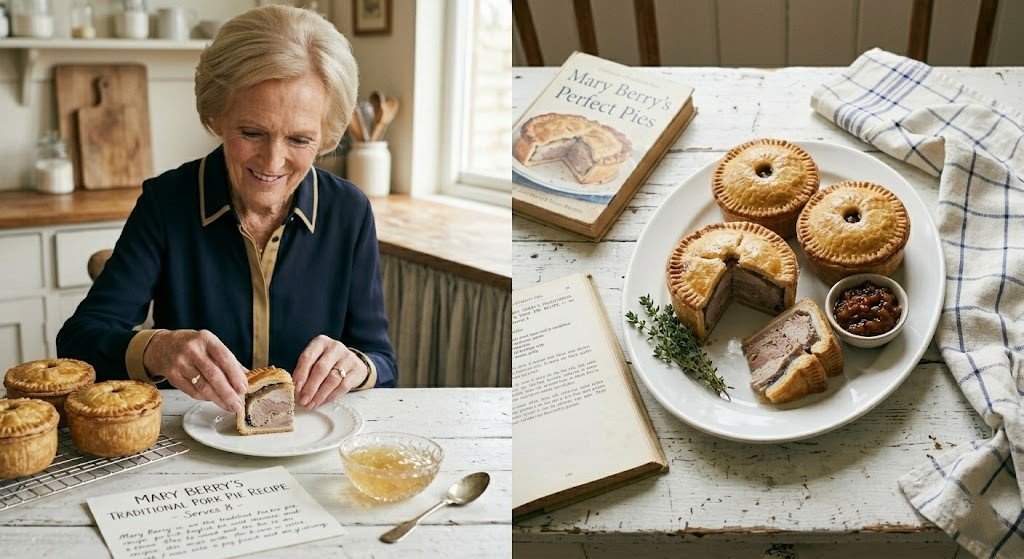
Mary Berry Pork Pie Recipe
Ingredients
Equipment
Method
- In a bowl, mix flour and salt. Heat water, butter, and lard until melted, then pour into the flour and mix to form a dough. Knead lightly while still warm.
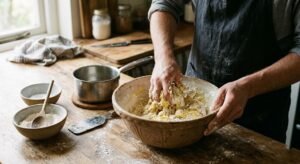
- Divide the dough into portions, roll out, and press into pie tins with a slight overhang. Prepare the filling by chopping pork and bacon, then mix with onion, parsley, and seasoning.

- Fill the pastry shells with the meat mixture, pressing firmly. Roll out remaining dough, add lids, seal edges, and make a small hole in the center.

- Chill the pies for 30 minutes, then bake at 190°C (375°F) for 45–50 minutes until golden.

- Simmer bones with vegetables to make stock, strain, and mix with gelatin. Let cool slightly, then pour into pies through the hole. Refrigerate for at least 4 hours until set, then slice and serve.

Notes
- Use hand-cut pork for better texture.
- Keep pastry warm while shaping to avoid cracks.
- Let jelly cool before pouring to protect pastry.
- Best made one day ahead for improved flavor.
What cut of pork is best for pork pie?
Pork shoulder is best because it has enough fat to keep the filling moist and flavorful.
Why is jelly added to pork pie?
Jelly fills gaps inside the pie and keeps the meat moist while adding extra flavor.
Can I make pork pie without lard?
Yes, you can use vegetable shortening or butter, but the texture and flavor will change slightly.
How long does pork pie last in the fridge?
It stays fresh for about 3 days when stored in an airtight container.
Can pork pie be eaten hot or cold?
It is traditionally eaten cold, but you can warm individual slices if preferred.
Conclusion
This pork pie represents a method that values patience and technique. Each stage, from pastry preparation to jelly setting, contributes to the final result.
When done correctly, the pie holds its shape, slices neatly, and delivers a combination of textures that define traditional British cooking.