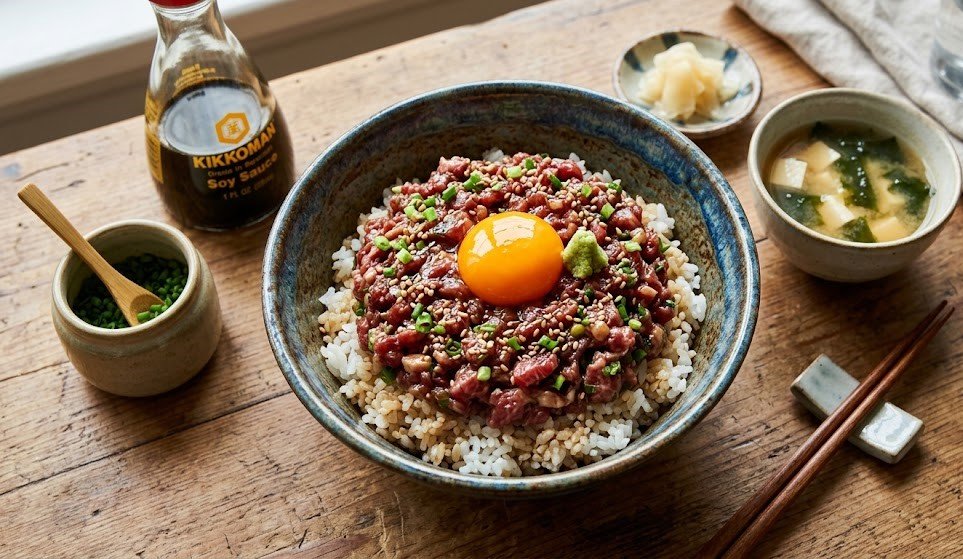

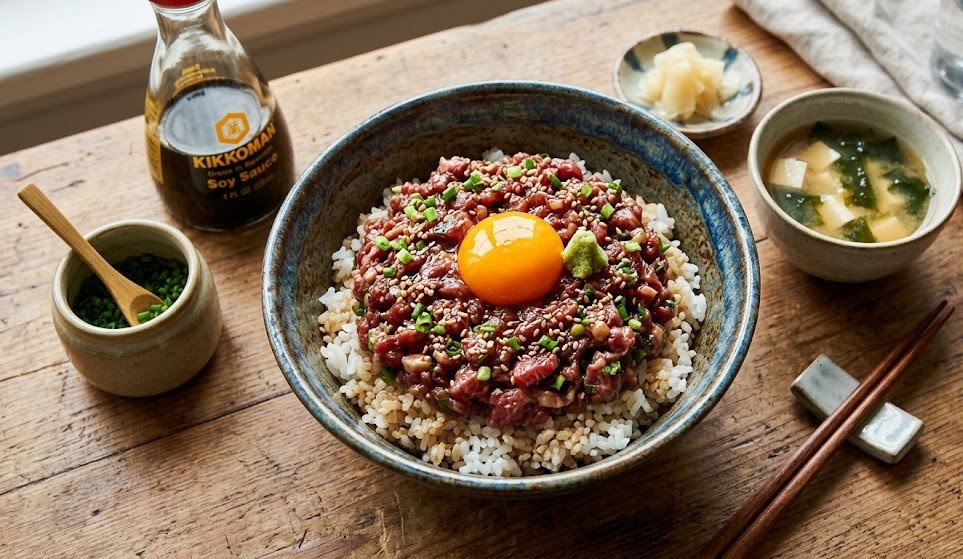
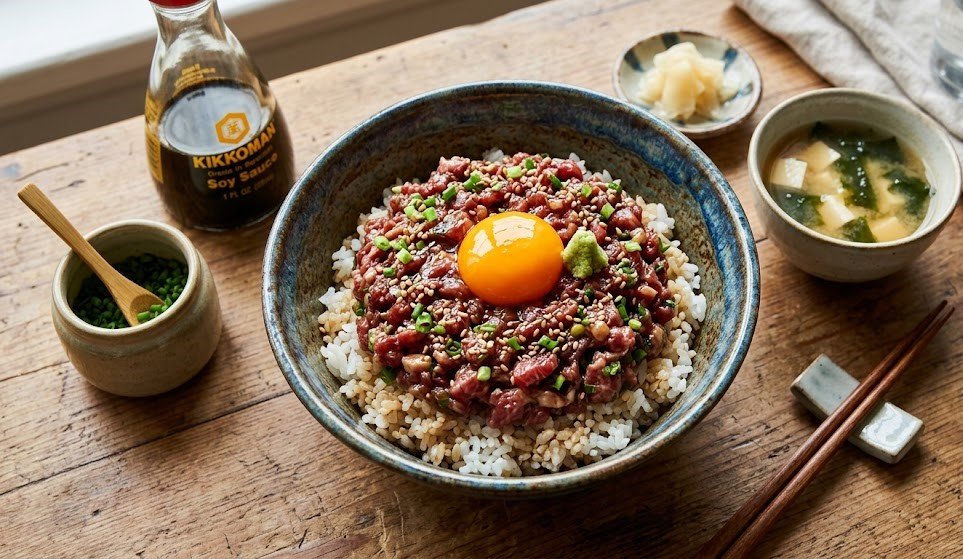
Gyutoro is a luxurious, melt-in-the-mouth beef preparation inspired by Japanese cuisine, often compared to fatty tuna (toro) because of its rich texture.
ultra-tender, buttery consistency.
Whether prepared using sous vide, braising, or pressure cooking, the goal remains the same: deeply flavorful, soft, and juicy beef.
Hi, my name is Dipendra Kumar. I am a chef. I cooked food for my family and relatives.
My family and relatives called me a pro chef.
This recipe focuses on a 72-hour cooking approach, which transforms a tough cut like short ribs into something incredibly delicate and refined.
While it requires patience, the results are restaurant-quality and worth every hour.
What Is Gyutoro
Gyutoro refers to beef prepared in a way that mimics the soft, fatty texture of premium tuna belly. It is not a traditional cut but rather a technique-driven dish.
The long cooking time breaks down connective tissues while preserving the meat’s structure, resulting in a silky, rich bite.
Why You’ll Love This Recipe
This recipe stands out because it delivers intense flavor with minimal complexity.
The slow cooking process enhances the natural beefiness while the seasoning remains simple and balanced.
It is versatile enough to be served in multiple ways—from rice bowls to elegant plated dishes—and can be adapted based on your preferred cooking method.
Ingredients
Main Ingredients
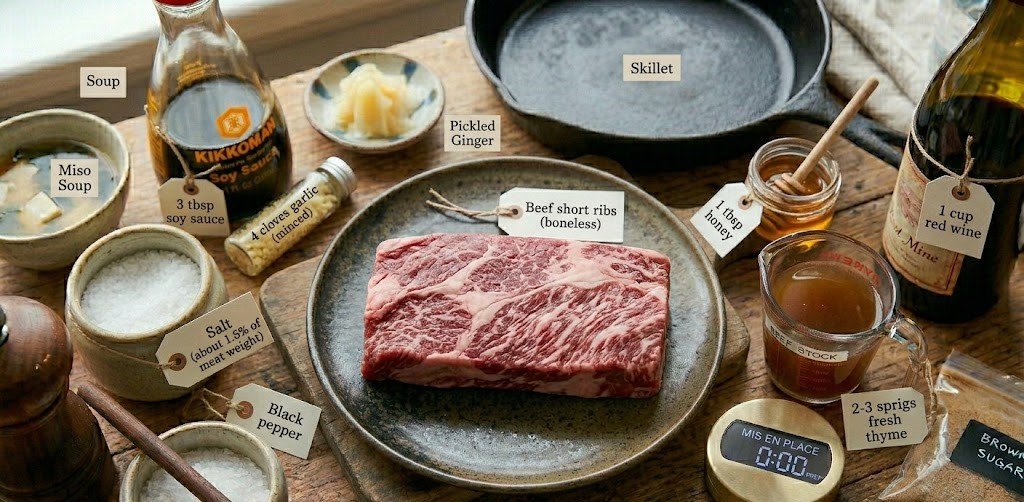
- 1 slab of beef short ribs (boneless preferred)
- Salt (about 1.5% of meat weight)
- Black pepper
- 2 cups beef stock
- 3 tbsp soy sauce
- 2 tbsp brown sugar
- 1 tbsp honey
- 1 cup red wine
- 4 cloves garlic (minced)
- 2–3 sprigs fresh thyme
Seasonings
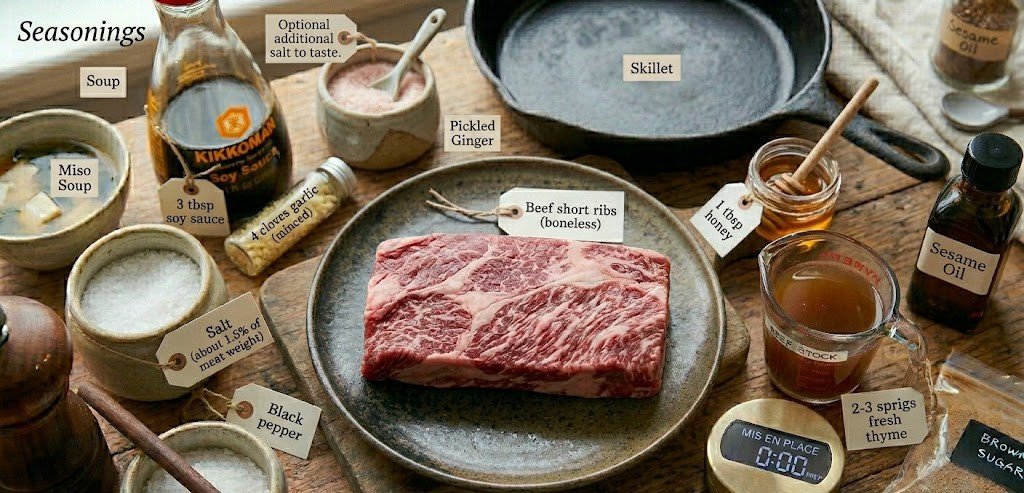
- Optional additional salt to taste
- Optional sesame oil for finishing
Garnish
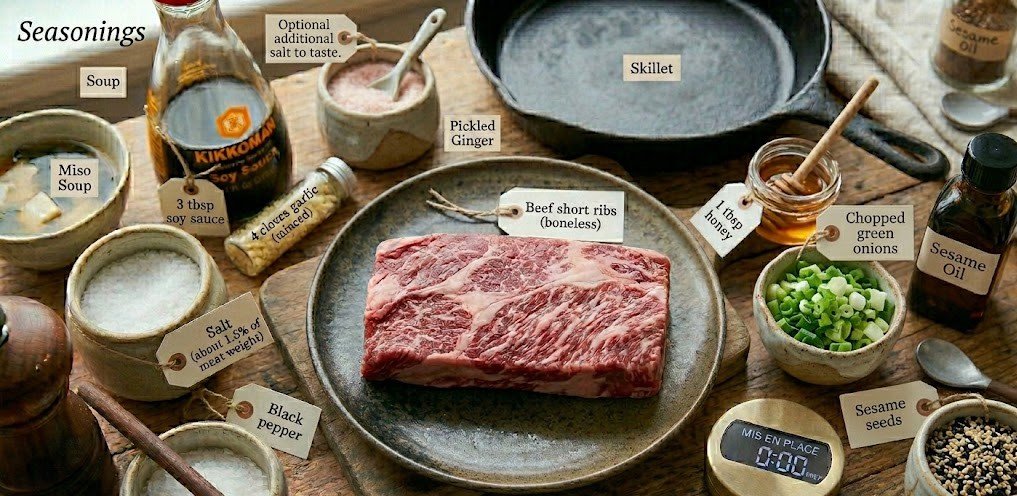
- Chopped green onions
- Sesame seeds
Kitchen Equipment You’ll Need
Preparation
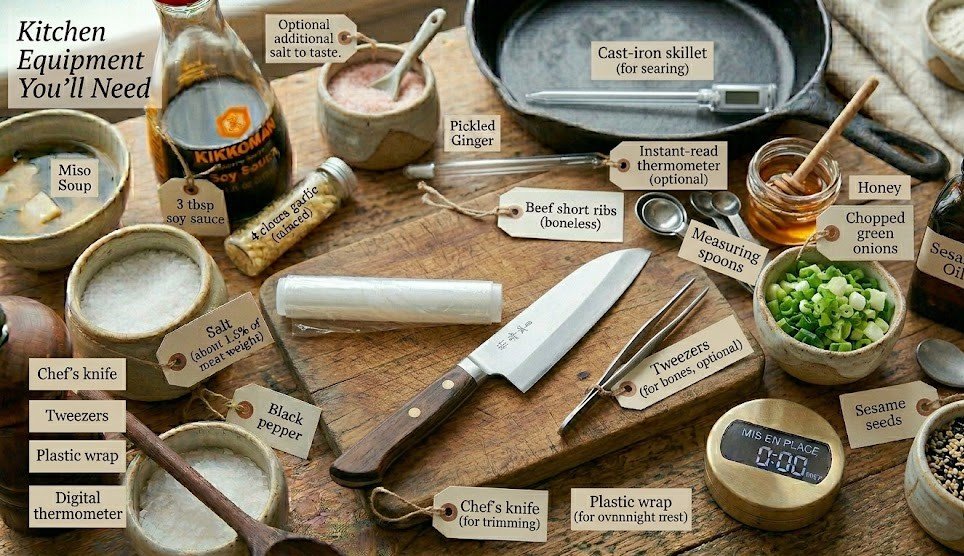
Start by preparing your short ribs. If using bone-in ribs, consider removing the bones for better texture and easier handling.
Trim excess fat while leaving enough for flavor. Season generously with salt and black pepper and let the meat rest at room temperature for about 30 minutes.
If you have time, resting the seasoned meat overnight in the refrigerator enhances flavor penetration.
Cooking Instructions
Step 1: Prepare the Short Ribs
Ensure the meat is evenly seasoned. Pat dry with paper towels before cooking to help achieve a good sear.
Step 2: Sear the Ribs
Heat a skillet over medium-high heat with a small amount of oil. Sear the ribs on all sides until a deep brown crust forms, about 3–4 minutes per side.
This step builds flavor through caramelization.
Step 3: Prepare Braising Liquid
In a large pot, combine beef stock, soy sauce, brown sugar, honey, red wine, garlic, and thyme. Stir until everything is well mixed and the sugar dissolves.
Step 4: Braise the Ribs
Transfer the seared ribs into the pot with the liquid. Bring it to a gentle simmer. Cover with a lid.
Step 5: Slow Cook
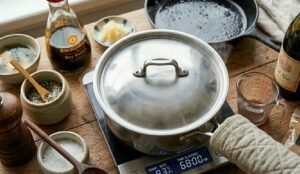
Place the pot in an oven set to 93°C (200°F) and cook for up to 72 hours. Maintain a low, steady temperature. Check occasionally to ensure the liquid level remains sufficient.
Step 6: Finish and Serve
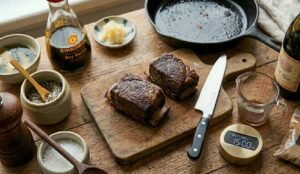
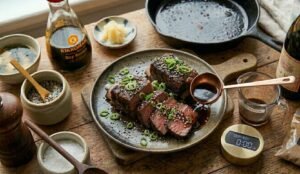
Remove the ribs from the oven and let them rest for 15 minutes. Spoon the cooking liquid over the meat before serving.
Sous Vide Cooking Method
For a more controlled texture, sous vide is an excellent method. After seasoning and searing, vacuum seal the ribs. Cook at 60°C (140°F) for 72 hours.
This produces a steak-like texture that is tender yet sliceable.
Once done, chill the meat slightly, then sear again quickly before serving to enhance flavor.
Deboning the Meat
Removing bones before cooking improves texture and prevents unpleasant flavors sometimes released during long cooking.
Use a sharp knife and follow the contour of the bones, letting the weight of the meat assist in separation.
Searing Technique
Searing is essential for flavor development. Always use high heat and avoid overcrowding the pan. Let the meat sit undisturbed to form a crust. This step enhances the final taste significantly.
Pressure Cooking Method
For a faster alternative, use a pressure cooker. After searing, cook the ribs with the same braising liquid on high pressure for about 35 minutes.
Allow natural pressure release for best results. While quicker, this method still yields tender and flavorful meat.
Cooking Tips
Pro Cooking Tips for Success
- Always sear the meat before slow cooking.
- Maintain a consistent low temperature for long cooks.
- Use boneless ribs for better texture.
- Let the meat rest before slicing to retain juices.
Best Practices for Long Cooking
Long cooking requires patience and consistency. Keep temperatures stable and avoid opening the oven frequently. This ensures even cooking and prevents moisture loss.
Avoiding Off Odors in Sous Vide
Removing bones and trimming impurities helps eliminate unwanted smells. Proper sealing and maintaining the correct temperature also play a key role.
Serving Suggestions
Gyutoro can be served in various ways depending on preference. Slice it thinly and serve over steamed rice, or plate it with vegetables for a complete meal.
It also works well in bowls with grains and stir-fried vegetables.
What to Serve With Short Ribs
- Steamed white or brown rice
- Sautéed vegetables
- Simple salads
- Light soups
These sides complement the richness of the beef without overpowering it.
Delicious Variations
You can adapt this recipe to suit different tastes. Add ginger and sesame oil for an Asian-inspired flavor. Use different herbs like rosemary for a Western touch.
You can also incorporate spices or sauces depending on your preference.
Substitutes for Ingredients
- Red wine → use beef broth or grape juice
- Soy sauce → use tamari or coconut aminos
- Brown sugar → substitute with white sugar or honey
- Short ribs → brisket or chuck roast
Healthier Options
To make the dish lighter, trim excess fat before cooking and reduce sugar in the braising liquid. Increasing the amount of vegetables in your serving can also balance the richness.
Storage Tips
Store leftover gyutoro in an airtight container in the refrigerator for up to 3 days. For longer storage, freeze it for up to 2 weeks. Reheat gently to maintain texture.
Make-Ahead Tips
This dish is ideal for meal prep. Cook in advance, chill, and portion it out. Reheat when needed with a bit of reserved cooking liquid to keep it moist.
Nutritional Information
- Calories: Moderate to high, depending on fat content
- Protein: High
- Fat: Rich due to marbling
- Carbohydrates: Low to moderate, depending on the sauce
Gyutoro Recipe (72-Hour Short Rib)
Ingredients
Equipment
Method
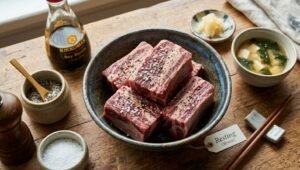
- Prepare the Short RibsSeason the short ribs generously with salt and black pepper. Let rest at room temperature for 30 minutes.
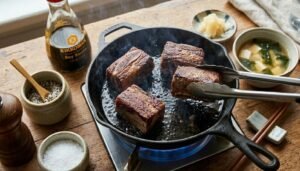
- Sear the RibsHeat a skillet over medium-high heat and sear the ribs on all sides until browned (3–4 minutes per side).
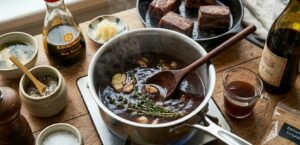
- Prepare the Braising LiquidIn a pot, combine beef stock, soy sauce, brown sugar, honey, red wine, garlic, and thyme. Stir well.
- Braise the RibsPlace the seared ribs into the liquid and bring to a gentle simmer.
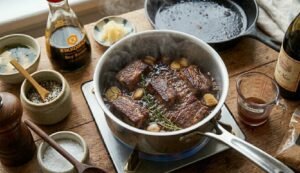
- Slow CookCover and cook in a preheated oven at 93°C (200°F) for up to 72 hours, maintaining a low simmer.
- Rest the MeatRemove from oven and let rest for 15 minutes.
- Finish and ServeSlice or serve whole with braising liquid spooned over the top. Garnish with green onions and sesame seeds.
Notes
- Boneless ribs are recommended for better texture and flavour.
- For sous vide: cook at 60°C (140°F) for 72 hours.
- For quicker cooking, use a pressure cooker for 35 minutes.
- Store leftovers in the fridge for up to 3 days or freeze for 2 weeks.
What is gyutoro made of?
Gyutoro is made from beef short ribs cooked slowly until extremely tender and rich.
Why cook short ribs for 72 hours?
Cooking for 72 hours breaks down tough fibers, making the meat ultra-soft and flavorful.
. Can I make gyutoro without sous vide?
Yes, you can use slow braising in an oven or a pressure cooker as alternatives.
What temperature is best for sous vide short ribs?
Around 60°C (140°F) is ideal for a tender, steak-like texture.
How do you serve gyutoro?
It is usually sliced and served over rice, in bowls, or with vegetables.
Conclusion
Gyutoro is a perfect example of how time and technique can transform a simple cut of beef into something extraordinary.
Whether you choose the traditional 72-hour slow cooking method, sous vide precision, or a quicker pressure cooking approach, the result is always deeply satisfying.
With its rich flavor, tender texture, and versatility, this dish is ideal for both special occasions and elevated home cooking.
Once mastered, it becomes a reliable and impressive recipe that you can adapt and refine over time.
Read More:-
Triple Delight Chinese Food Recipe
Thanks for reading my articles.