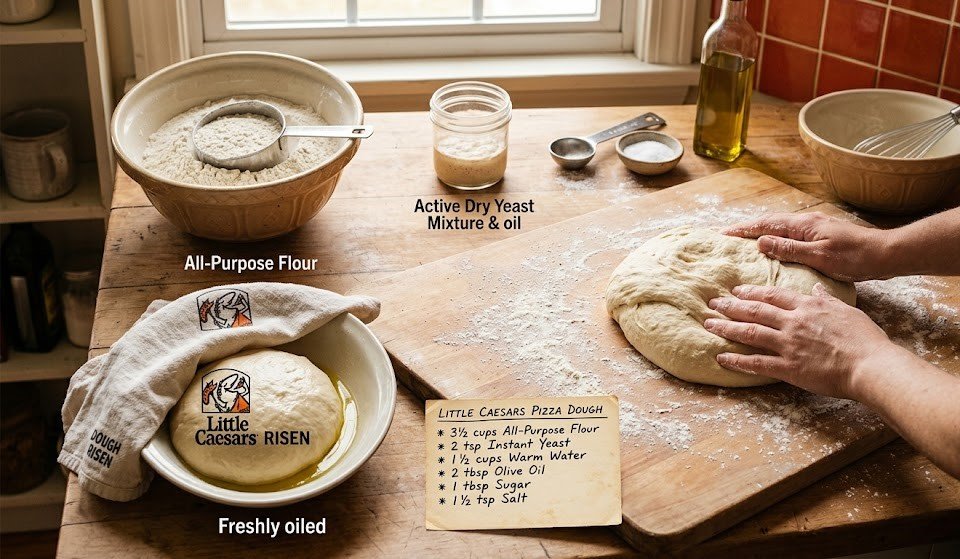

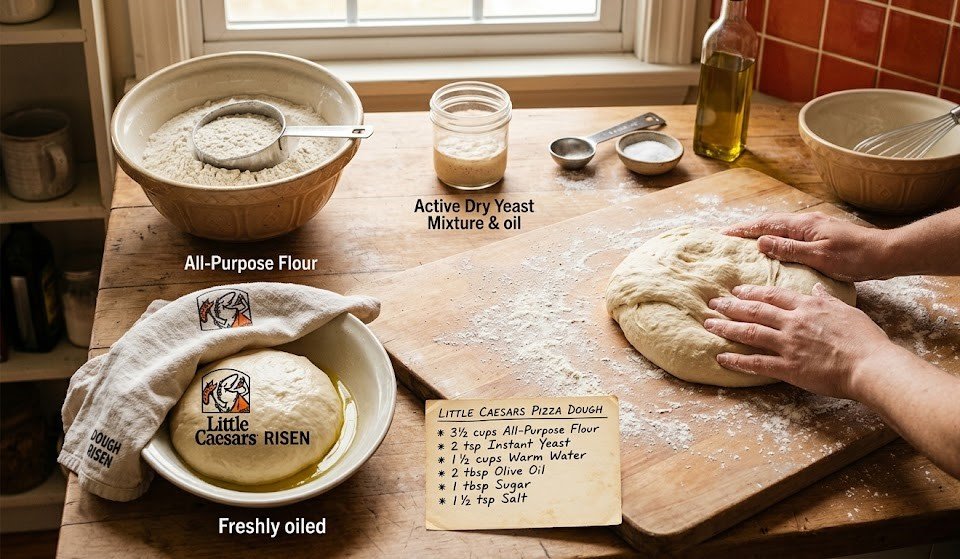
Making pizza at home is one of those simple pleasures that never gets old. A good dough is the foundation of everything—it determines the texture, flavor, and overall experience.
This recipe recreates a soft, chewy, slightly crisp crust that works perfectly for everyday pizza nights.
It’s designed to be easy, reliable, and flexible. You don’t need special tools or advanced skills.
Hi, my name is Dipendra Kumar. I am a chef. I cooked for my family and relatives.
My family and relative scalled me a pro chef.
With just a few basic ingredients and a little patience, you can create a dough that holds toppings well and bakes beautifully in a regular home oven.
Recipe Overview
This dough strikes a balance between softness and structure.
It’s neither too thin nor too thick, making it versatile for different styles, such as pan pizza, a regular crust, or even breadsticks.
- Prep Time: 20 minutes
- Rise Time: 60–90 minutes
- Cook Time: 10–12 minutes
- Yield: 3–4 medium pizzas
What Makes This Dough Special
This dough is designed to be forgiving and easy to handle.
A small amount of sugar helps activate the yeast and adds subtle flavor, while oil keeps the dough soft and prevents it from drying out.
The result is:
- Soft interior
- Lightly crisp edges
- Stretchable dough that doesn’t tear easily
Ingredients
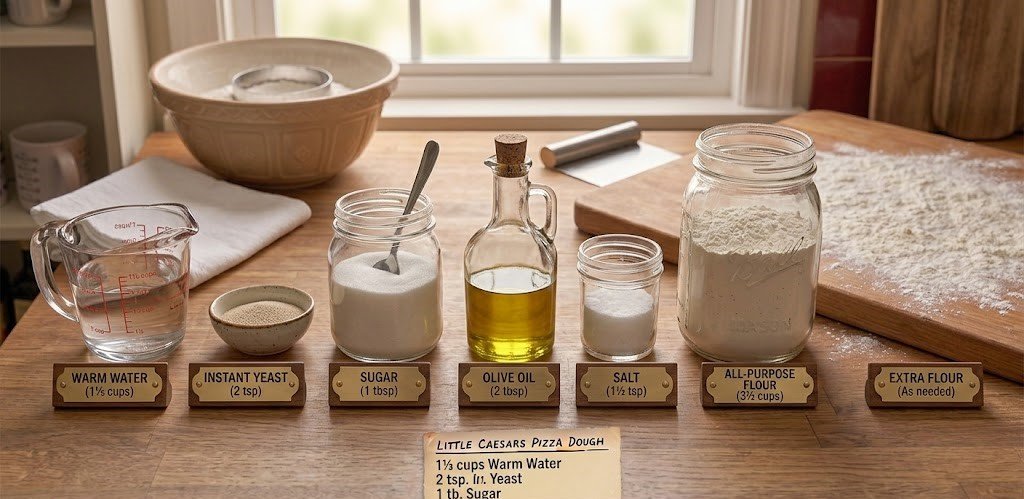
Here are the ingredients you’ll need:
| Ingredient | Quantity | Purpose |
|---|---|---|
| Warm water | 1⅓ cups | Activates yeast |
| Instant yeast | 2 teaspoons | Helps dough rise |
| Sugar | 1 tablespoon | Feeds yeast and adds slight flavor |
| Olive oil | 2 tablespoons | Adds softness and texture |
| Salt | 1½ teaspoons | Enhances flavor |
| All-purpose flour | 3½ cups | Base structure of the dough |
| Extra flour | As needed | For kneading and dusting |
Note: Bread flour can be used for a chewier texture.
Equipment
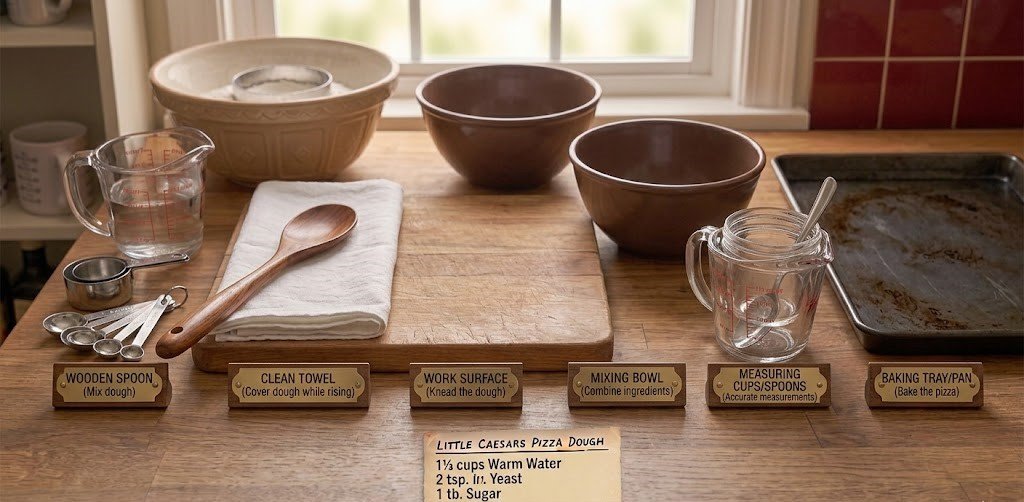
You don’t need fancy tools—just basic kitchen items:
| Equipment | Purpose |
|---|---|
| Mixing bowl | Combine ingredients |
| Wooden spoon | Mix dough |
| Measuring cups/spoons | Accurate measurements |
| Clean towel | Cover dough while rising |
| Baking tray/pan | Bake the pizza |
| Work surface | Knead the dough |
How to Make Little Caesars Pizza Dough
Follow these step-by-step instructions for the best results.
Step 1: Proof the Yeast
Start by pouring warm water into a large mixing bowl. The water should feel like warm bath water—not hot.
Add sugar and yeast, then stir gently. Let it sit for about 5 minutes.
You’ll notice bubbles forming on the surface. This means the yeast is active and ready.
Step 2: Mix the Dough
Add olive oil and salt to the yeast mixture.
Now begin adding flour gradually, mixing with a spoon. Continue until the mixture forms a sticky, shaggy dough.
At this stage, it won’t look smooth yet—that’s completely normal.
Step 3: Knead the Dough
Transfer the dough onto a lightly floured surface.
Knead it using the heel of your hand:
- Push forward
- Fold back
- Repeat
Do this for about 6–8 minutes until the dough becomes:
- Smooth
- Elastic
- Soft to touch
If it sticks too much, sprinkle a little flour—but avoid adding too much.
Step 4: First Rise
Lightly oil a bowl and place the dough inside.
Cover it with a clean towel or plastic wrap.
Let it rise in a warm place for about 60 minutes, or until it doubles in size.
This step is essential for building flavor and texture.
Step 5: Shape the Dough
Once the dough has risen, gently punch it down to release air.
Divide it into 3–4 equal portions depending on your preferred pizza size.
Shape each portion into a smooth ball by tucking the edges underneath.
Step 6: Second Rest
Place the dough balls on a tray and cover them.
Let them rest for 10–15 minutes.
This step relaxes the gluten, making the dough easier to stretch without tearing.
Step 7: Form the Pizza Base
Take one dough ball and flatten it using your hands or a rolling pin.
Stretch it into a round shape, about 10–12 inches wide.
If the dough shrinks back, let it rest for a few minutes and try again.
Step 8: Add Toppings
Place the shaped dough onto a greased baking tray or parchment paper.
Add:
- Sauce
- Cheese
- Your favorite toppings
Avoid overloading, as too many toppings can make the pizza soggy.
Step 9: Bake the Pizza
Preheat your oven to 475°F (245°C).
Bake the pizza for 10–12 minutes until:
- The crust turns golden
- The cheese melts and bubbles
For extra crispiness, preheat the baking tray before placing the dough on it.
Tips & Tricks
- Always use warm—not hot—water for yeast
- Let the dough rise fully for better flavor
- Don’t over-flour during kneading
- Resting the dough makes shaping easier
- Preheating the oven is crucial for a good crust
Common Mistakes to Avoid
1. Using hot water
This can kill the yeast and prevent the dough from rising.
2. Skipping the rise time
The dough will turn dense and lack flavor.
3. Adding too much flour
This makes the crust dry and tough.
4. Not kneading enough
The dough won’t develop proper elasticity.
How to Get a Crispy Crust
If you prefer a crispier base:
- Preheat your oven fully
- Use a preheated tray or stone
- Brush edges lightly with oil
- Avoid too much sauce
These small changes make a noticeable difference.
Serving Suggestions
This dough works well with a variety of toppings. Some great combinations include:
- Classic cheese and tomato
- Pepperoni and mozzarella
- Veggie-loaded pizza
- Chicken and barbecue sauce
Serve your pizza hot with:
- Garlic butter dip
- Simple salad
- Roasted vegetables
Storage Instructions
Refrigeration
Store dough in an airtight container in the fridge for up to 3 days.
Freezing
Divide into balls and freeze for up to 3 months.
To use:
- Thaw overnight in the fridge
- Let it sit at room temperature before shaping
Reheating Pizza
To reheat baked pizza:
- Oven: 375°F for 6–8 minutes
- Avoid the microwave if possible, as it softens the crust
Nutrition Information (Approximate)
- Calories per slice: 180–200
- Carbohydrates: Moderate
- Protein: Moderate
- Fat: Low (without toppings)
Values vary depending on the toppings used.
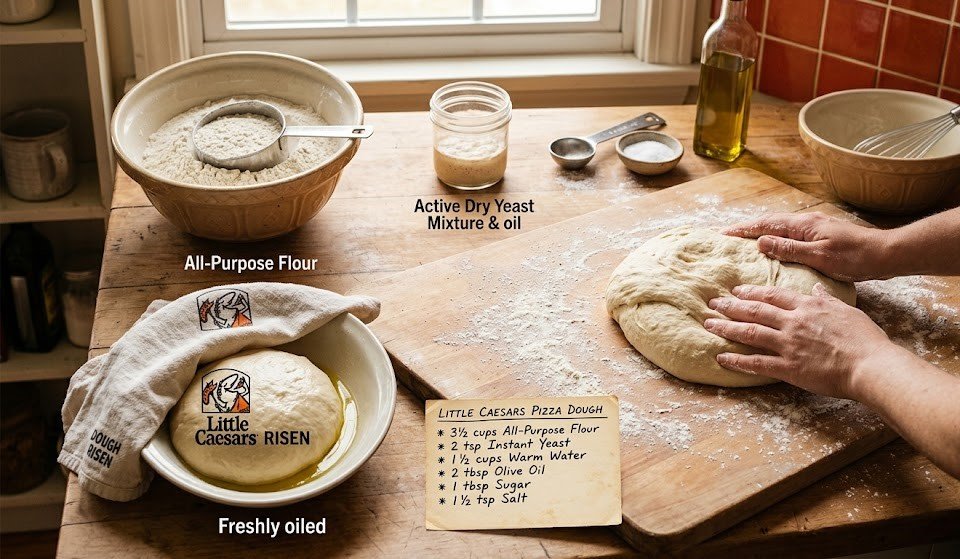
Little Caesars Style Pizza Dough
Ingredients
Equipment
Method
- In a large bowl, mix warm water, sugar, and yeast. Let it sit for 5 minutes until foamy.
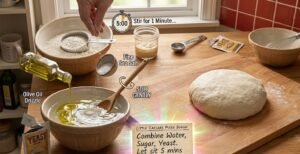
- Add olive oil and salt to the mixture and stir gently.

- Gradually add flour while mixing until a sticky dough forms.

- Transfer the dough to a floured surface and knead for 6–8 minutes until smooth and elastic.

- Place the dough in a lightly oiled bowl, cover, and let it rise for 1 hour or until doubled.

- Punch down the dough and divide it into 3–4 equal portions.

- Shape into balls and let them rest for 10–15 minutes.

- Roll or stretch into pizza bases, add toppings, and bake at 475°F (245°C) for 10–12 minutes until golden.

Notes
- Use warm—not hot—water to avoid killing the yeast.
- Let the dough rest if it resists stretching.
- Bread flour gives a chewier crust, but all-purpose flour works well.
- Dough can be refrigerated for up to 3 days or frozen for later use.
Can I make pizza dough ahead of time?
Yes, you can store it in the fridge for up to 2–3 days. It actually tastes better as it rests.
Why is my pizza dough not rising?
This usually happens due to inactive yeast, wrong water temperature, or a cold environment.
Can I freeze pizza dough?
Yes, freeze it in dough balls for up to 3 months. Thaw overnight before using.
Which flour is best for pizza dough?
Bread flour gives a chewier texture, but all-purpose flour works perfectly, too.
What oven temperature is best for pizza?
Bake at a high temperature, around 475–500°F (245–260°C), for best results.
Conclusion
This pizza dough recipe is simple, flexible, and consistently reliable. It’s perfect for beginners and experienced home cooks alike.
With just a few pantry ingredients, you can create a soft, chewy crust that holds up well to toppings and bakes beautifully in a standard oven.
Once you try making it at home, it becomes more than just a recipe—it turns into a go-to comfort meal.
Whether you’re cooking for family, friends, or just yourself, this dough delivers great results every time.
If you want, I can also turn this into a blog-ready SEO article or add internal linking + meta description.